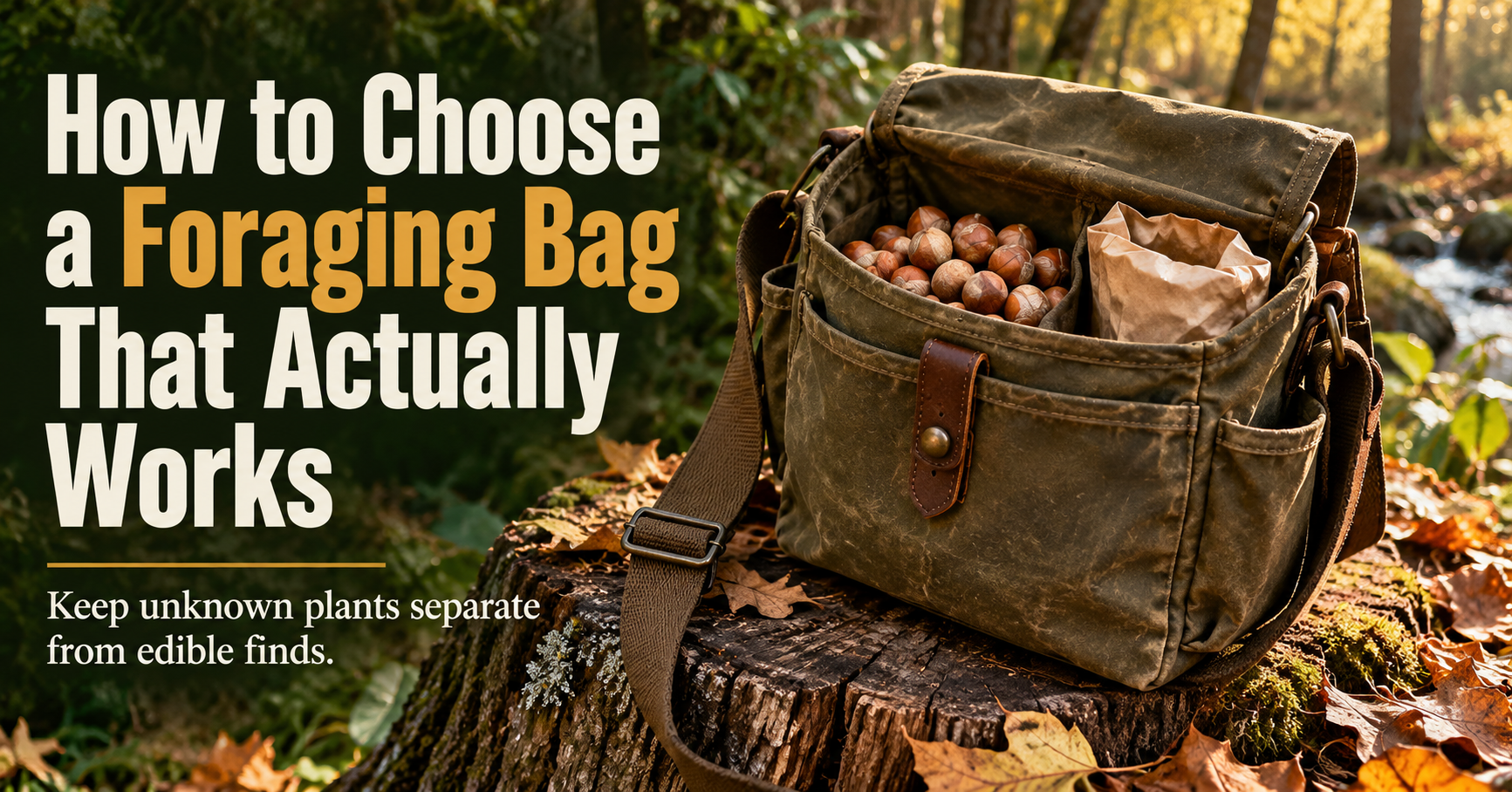
The wrong foraging bag can ruin a good harvest before you even make it home.
Imagine spending two hours gathering wild berries, only to discover the ones at the bottom of your bag have turned into a sticky mess.
Or finding a beautiful patch of mushrooms, stuffing them into a plastic grocery bag, and getting home with a pile of bruised, damp mushrooms.
That’s why I don’t think there’s one perfect foraging bag for everything.
Mushrooms need airflow and protection from crushing. Berries need support. Nuts can handle more weight. Wild greens need room without being packed tightly.
The best foraging bag depends on what you’re gathering, how far you’re walking, and whether you need both hands free.
And here’s something I think beginners overlook: sometimes the best foraging bag isn’t technically a bag at all.
What Type of Foraging Bag Is Best?
For most beginners, I’d start with a breathable mesh foraging bag or a lightweight harvesting bag with a wide opening.
But there are exceptions.
A mesh bag works well for many mushrooms and sturdy wild plants.
A canvas harvesting bag is useful when gathering nuts, larger fruits, and tougher materials.
A rigid basket is often better for delicate mushrooms and berries that would otherwise get crushed.
The Missouri Department of Conservation recommends a basket or flat-bottomed cloth bag for collecting edible mushrooms and cautions against plastic grocery bags because they trap moisture and offer little protection from damage.
That’s a useful distinction.
I wouldn’t buy a bag just because the product description says it’s designed for foraging.
I’d look at what it actually does.
Mesh Foraging Bags Are Great for Mushrooms
If mushroom hunting is the main reason you’re shopping, mesh deserves serious consideration.
The biggest advantage is airflow.
Fresh mushrooms contain a lot of moisture. When they’re packed into a closed plastic bag, that moisture can accumulate and accelerate deterioration.
University of New Hampshire Extension recommends packaging mushrooms in containers that allow airflow because poor ventilation can contribute to spoilage.
Mesh also allows loose dirt and small debris to fall away.
But there’s one drawback I wouldn’t ignore.
Mesh doesn’t protect mushrooms from being crushed.
If I’m walking through thick brush and constantly bumping the bag against my legs, a delicate mushroom can get damaged.
For fragile mushrooms, I actually prefer a shallow basket.
Does a Mesh Foraging Bag Help Spread Mushroom Spores?
You’ve probably heard that carrying mushrooms in mesh bags helps spread spores throughout the woods.
There’s a reasonable biological explanation for why spores might escape through mesh.
However, the Missouri Department of Conservation specifically notes that it hasn’t seen scientific research establishing how effective this practice is.
So I wouldn’t buy a mesh bag solely because someone promises it will reseed the forest.
I’d buy it for ventilation and convenience first.

Canvas Foraging Bags Are Better for Heavier Harvests
Canvas is a different animal.
A sturdy canvas foraging bag can handle heavier, rougher materials without the fabric stretching or snagging as easily as lightweight mesh.
This is where I’d consider it for gathering:
- Acorns
- Hickory nuts
- Walnuts
- Chestnuts
- Larger wild fruits
- Other sturdy harvests
I especially like the idea of a canvas harvesting bag that attaches around the waist.
That leaves both hands available.
But canvas has disadvantages too.
A tightly woven or waxed canvas bag may not provide much ventilation. It can also become heavy when wet.
For fresh mushrooms, I’d rather use breathable inserts or another container than pile them into the bottom of a closed canvas pouch.
A Foraging Basket Is Sometimes the Better Choice
Baskets aren’t as compact as bags.
They can be awkward when climbing over fallen trees or moving through dense vegetation.
But they have one enormous advantage.
They hold their shape.
That’s important when collecting something delicate.
A mushroom sitting in a shallow basket isn’t necessarily supporting the weight of everything collected afterward.
The same goes for ripe berries.
A basket also makes it easier to keep different finds separated.
For mushroom collecting, the Missouri Department of Conservation specifically recommends a basket or flat-bottomed cloth bag to help keep specimens clean and intact.
If I’m staying fairly close to home and gathering delicate mushrooms, a basket would often be my first choice.

What About Foraging Bags for Berries?
This is where I’d be careful.
Berries are much easier to crush than people realize.
A big mesh sack might be perfectly fine for gathering nuts, but it isn’t necessarily what I want for a few pounds of ripe blackberries.
The berries at the bottom carry the weight of everything above them.
That can lead to bruising, leaking juice, and damaged fruit.
For berries, I’d rather have a shallow, rigid container or several smaller containers inside my harvesting bag.
That way the bag carries the containers instead of the berries supporting one another.
Virginia Tech’s produce-safety guidance discusses using appropriate harvest containers and protecting produce from contamination during collection and transport.
My Favorite Setup for Berries
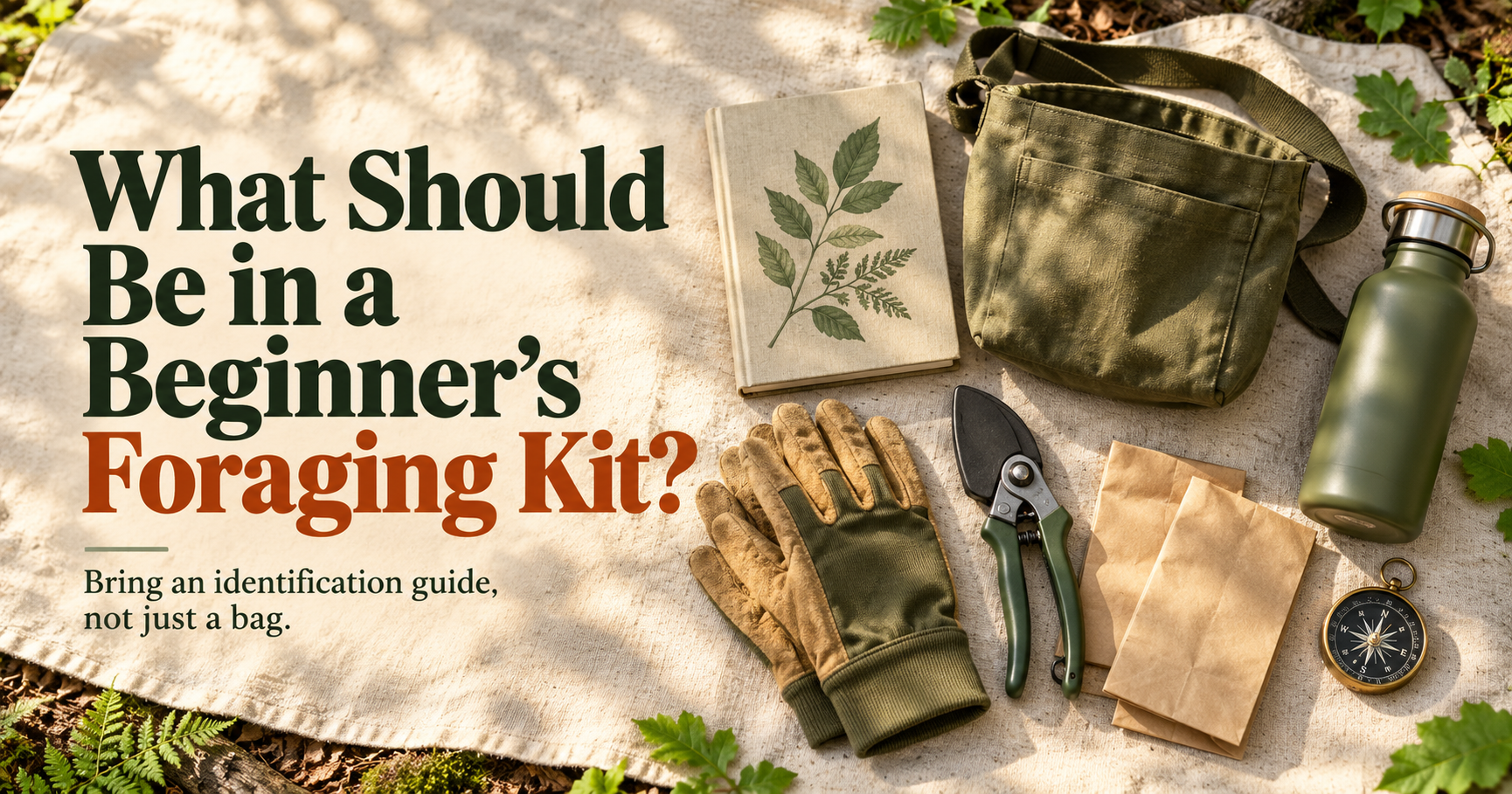
I’d use a comfortable harvesting bag or small backpack to carry several shallow food-safe containers. That setup is one practical part of a beginner foraging kit for short gathering trips.
As each container fills, I’d stop adding berries rather than piling them higher.
It’s a little less convenient than tossing everything into one big sack.
But I’d rather bring home intact berries than a bag full of juice.
Foraging Wild Greens Requires a Different Approach
Wild greens don’t usually need the same rigid protection as ripe berries.
But they can wilt, bruise, and become damaged when packed tightly.
For tender greens, I like a clean, roomy bag that doesn’t compress the leaves.
A breathable fabric bag can work for a short gathering trip.
If the weather is hot or I’m going to be out for several hours, I’d also think about how quickly I can get the harvest cooled.
A foraging bag isn’t refrigerated storage.
That’s an important distinction.

What Size Foraging Bag Should I Buy?
This is where I’d resist buying the biggest bag available.
A huge harvesting bag sounds useful until it’s hanging from your waist full of heavy nuts.
Or dragging against brush.
Or constantly swinging into your legs.
For most casual gathering trips, I’d rather have a manageable bag that I can empty into larger containers when necessary.
Here’s how I’d think about capacity.
Small Foraging Bags
Best for short walks, gathering a few mushrooms, collecting small quantities of herbs, or bringing home a modest harvest.
They’re lightweight and easy to carry.
Medium Foraging Bags
Probably the most versatile option for someone who gathers different things.
Enough room for a reasonable harvest without encouraging me to overload it.
Large Foraging Bags
More useful for bulky or heavier harvests, especially when I don’t need to walk far.
But I’d pay attention to the weight.
A bag that’s comfortable when empty can become miserable when filled.
I Prefer a Wide Opening
This is one of the first design details I’d inspect.
A narrow opening makes it harder to place delicate finds inside without damaging them.
A wide opening lets me lower mushrooms, fruit, or other gathered materials into the bag instead of forcing them through a small hole.
For nuts, this matters less.
For delicate mushrooms and ripe fruit, it matters considerably.

A Waist-Mounted Foraging Bag Can Be Surprisingly Useful
One reason harvesting bags are popular is that they free up your hands.
That’s especially helpful when walking through uneven ground.
I don’t want to carry a bag in one hand while trying to maintain my balance with the other.
A waist-mounted bag can also make gathering faster because the opening stays within easy reach.
But I want the attachment system to be secure.
A bag that constantly slides down or swings around isn’t something I’d enjoy using.
Shoulder Straps Have Their Place Too
For longer walks, a shoulder strap can distribute the load differently.
I prefer an adjustable strap rather than a fixed-length one.
A bag that hangs too low can catch on brush or bump against my legs.
A strap that digs into my shoulder gets uncomfortable as the harvest gets heavier.
If I’m carrying several pounds of nuts, comfort becomes much more important than it was when the bag was empty.
I Want a Bag That’s Easy to Clean
This is something I wouldn’t overlook.
Foraging bags collect dirt.
Sometimes mud.
Leaves.
Plant residue.
Mushroom debris.
Fruit juice.
And occasionally insects.
If the bag is difficult to clean, that residue can remain inside between trips.
I prefer materials that can be cleaned according to the manufacturer’s instructions and dried thoroughly before storage.
A bag that stays damp in the garage can develop its own problems.
Separate Compartments Are More Useful Than They Look
One large compartment works when I’m gathering one thing.
It becomes less useful when collecting several different materials.
I don’t want delicate berries underneath a pile of walnuts.
I don’t want unidentified mushrooms mixed with mushrooms someone intends to eat.
And I don’t want muddy roots sitting directly against clean greens.
Separate containers or compartments solve those problems.
For mushrooms in particular, the Missouri Department of Conservation recommends keeping different species physically separated, especially unidentified specimens.
That’s a safety issue, not merely organization.
I Never Mix Unidentified Mushrooms With Food
This is worth emphasizing.
A foraging bag doesn’t make anything safe to eat.
Neither does a mushroom identification app.
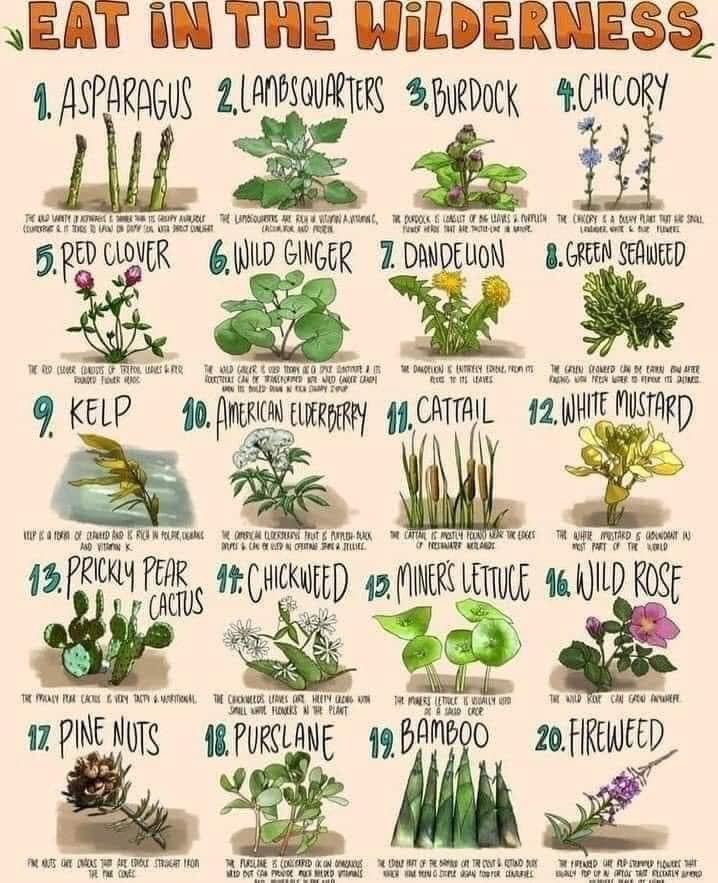
Some poisonous mushrooms resemble edible species closely enough that mistakes can be dangerous or fatal. Use this safe wild foods guide to review identification and safety before bringing unfamiliar mushrooms home.
The Missouri Department of Conservation recommends learning from experienced mushroom hunters, using multiple identification resources, and obtaining a completely positive identification before eating wild mushrooms.

I wouldn’t collect an unknown mushroom and toss it into a bag of edible mushrooms. A cautious forager may want an Edible Wild Plants field guide nearby to support careful plant identification before gathering.
If collecting something for identification, I’d keep it physically separate and clearly labeled.
That’s especially important when other people may handle the harvest later.
I Don’t Use a Plastic Grocery Bag for Everything
Plastic grocery bags are convenient.
They’re cheap.
They’re everywhere.
But they aren’t my favorite foraging containers.
They offer very little protection from crushing.
They can trap moisture.
And they aren’t particularly comfortable to carry over longer distances.
For mushrooms, Michigan State University Extension specifically advises against plastic bags because they can accelerate deterioration.
I’d rather have a container suited to the harvest.
Foraging Bags Aren’t Just for Wilderness Survival
This is one reason I like the subject for Survive Essentials.
A good harvesting bag is useful even when there’s no emergency.
Gathering black walnuts.
Picking fruit.
Collecting garden produce.
Harvesting herbs.
Gathering edible plants that have been positively identified.
Those are ordinary activities that build useful skills.
That’s how I prefer to approach preparedness.
Use the equipment now.
Learn what works.
Don’t wait until food becomes difficult to obtain before trying to gather something.
I Wouldn’t Spend a Fortune on My First Foraging Bag
A beginner doesn’t need an expensive handcrafted harvesting bag.
A clean basket or suitable breathable bag may be enough to get started.
I’d rather spend money on learning proper plant identification, understanding local harvesting rules, and getting comfortable outdoors.
The bag matters.
But it’s still just a container.
Foraging Equipment Should Match the Entire Trip
The bag isn’t the only thing I think about before heading into the woods.
Depending on where I’m going, I may also need appropriate clothing, water, navigation equipment, a first aid kit, and a reliable way to contact someone.
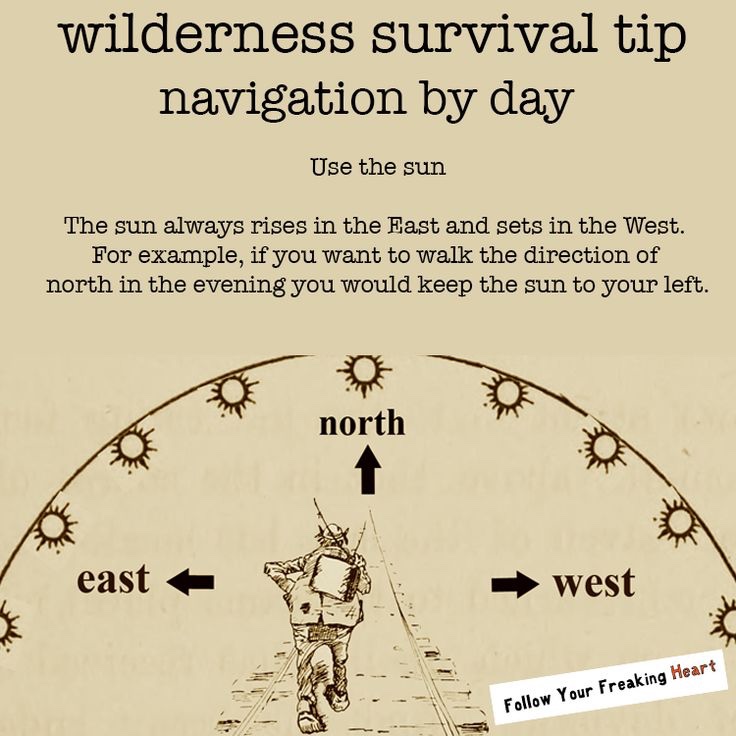
That connects naturally with our existing survival navigation guide.
Getting lost while searching for mushrooms is a much bigger problem than choosing the wrong harvesting bag.
We’ll cover the rest of the equipment in our upcoming beginner’s foraging kit guide.
I Check Whether Gathering Is Actually Allowed
Finding something growing in the woods doesn’t automatically mean I’m allowed to take it.
Public lands have different rules.
Some areas permit limited personal harvesting.
Others restrict certain plants or prohibit collecting.
Private property requires the landowner’s permission.
Before collecting, I check the rules for that specific location and what I’m planning to gather.
I also avoid taking more than I can reasonably use.
The USDA’s guidance on responsible wild-plant harvesting emphasizes sustainable collection and respecting access and harvesting rights.
I Don’t Harvest Everything I Find
A productive patch can be tempting.
But I don’t need to strip an area clean simply because I found something useful.
Leaving part of the harvest supports wildlife and future growth.
It also means another person may have the opportunity to gather something.
Foraging should be a renewable skill.
Not a competition to remove everything before somebody else gets there.
How I Would Choose My First Foraging Bag
If I were buying one today, I’d make the decision based on what I expected to gather most often.
Mostly mushrooms?
A breathable mesh bag or rigid basket.
Mostly berries?
A bag capable of carrying shallow, protective containers.
Mostly nuts?
A sturdy canvas harvesting bag with comfortable straps.
Mostly wild greens?
A roomy, clean bag that won’t crush the leaves.
A little of everything?
A versatile harvesting bag with separate containers or compartments.
That’s a much better starting point than buying whatever bag looks the most outdoorsy.
My Foraging Bag Checklist
Before choosing one, I’d check:
- Does the material suit what I’m gathering?
- Is there enough ventilation when needed?
- Will delicate items get crushed?
- Is the opening wide enough?
- Can I carry it comfortably when full?
- Does it leave my hands free?
- Can I separate different harvests?
- Is the material easy to clean?
- Is the capacity realistic for my trips?
- Can I use it for gardening and other everyday harvesting?
If the bag passes those tests, I don’t care whether it has an expensive logo.
The Bag Should Protect the Harvest, Not Just Carry It
That’s the biggest lesson I’d want someone to take away.
A foraging bag isn’t automatically good because it holds a lot.
It’s good when it carries the things I’m gathering without unnecessarily damaging them.
For mushrooms, that often means ventilation and protection from crushing.
For berries, it means support.
For nuts, strength.
For greens, room and appropriate handling.
I’d rather bring home a smaller amount of clean, undamaged food than a huge bag of bruised produce.
And that’s why I choose the container based on the harvest, not the other way around.
About the Author
Evan Brooks writes about foraging equipment, emergency food production, seed storage, gardening, and practical self-reliance for Survive Essentials. His articles focus on choosing useful equipment, understanding how different harvests should be handled, and building food-gathering skills that can be practiced long before an emergency happens.