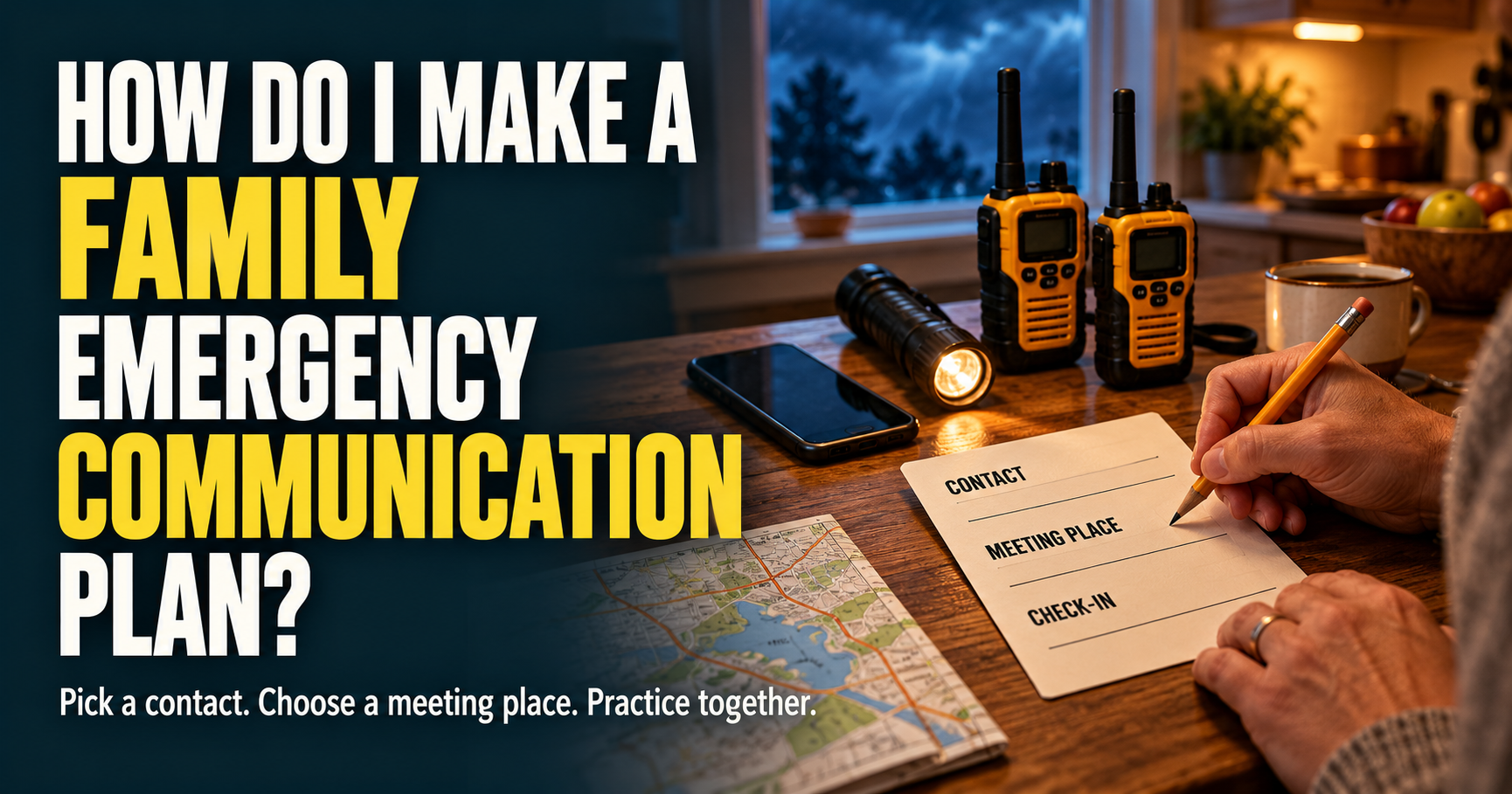
A family emergency communication plan sounds like something complicated until I break it down into the questions that actually matter.
Where do we meet?
Who do we call?
Who gets the kids?
What if cell service is down?
What if we can’t get home?
What if everybody is in a different place when the emergency starts?
Those are the questions I want answered before anything happens.
I don’t want to be making those decisions while a tornado warning is going off, roads are blocked, or nobody can get a phone call through.
For me, the best emergency communication plan is simple enough that everybody in the family can actually remember it.
Start With One Out-of-Area Contact
One of the smartest recommendations in FEMA’s family communication planning guidance is choosing the same out-of-town contact for everyone in the household.
That gives everybody one person to reach if local family members can’t immediately reach each other.
Sometimes somebody outside the affected area may be easier to contact than someone nearby during a widespread emergency.
I would choose someone dependable.
Someone who answers their phone.
Someone who knows they’re part of the plan.
Someone who can receive short updates from different family members and help everyone understand who’s safe and where they are.
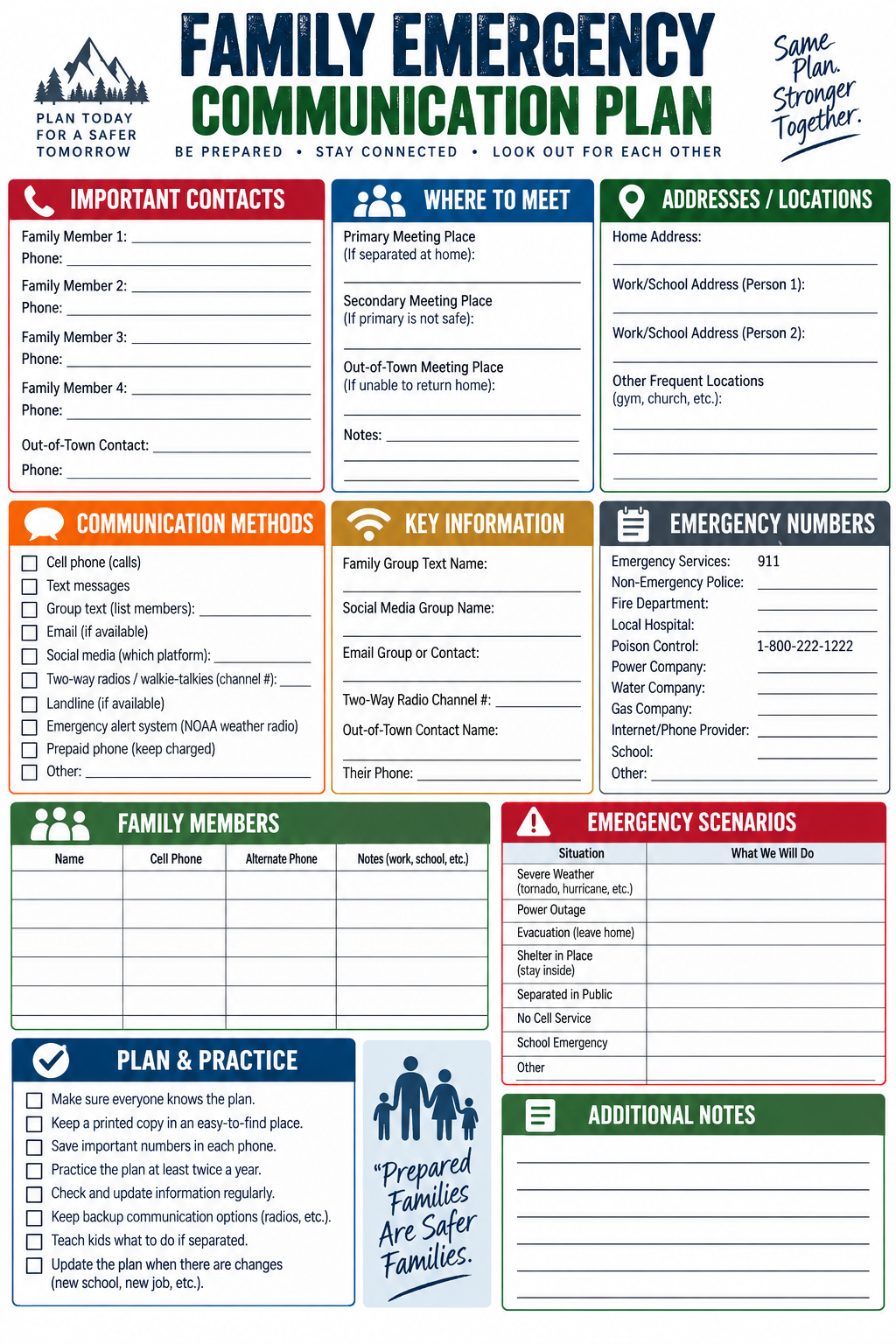
Everybody Should Know That Contact
I don’t want the contact saved only in my phone.
If my phone is lost, dead, or damaged, that doesn’t help much.
I want every family member old enough to understand the plan to know:
The person’s name.
Their phone number.
Their relationship to us.
At minimum, I would also keep the number written somewhere.
FEMA recommends that household members carry copies of the family communication plan in places such as wallets, backpacks, purses, vehicles, and emergency kits.
Paper still works when batteries don’t.



Pick a Meeting Place Near Home
The first meeting place should be somewhere close.
This is for situations where we need to get out of the house quickly but the neighborhood itself is still safe.
That could be:
A neighbor’s house.
A specific large tree.
The end of the driveway.
A detached building.
Another obvious landmark.
I want one place everybody understands.
Not:
“Meet somewhere outside.”
That’s too vague.
I want:
“If we have to leave the house, meet at this exact spot.”
Pick a Second Meeting Place Outside the Neighborhood
The second location is for a bigger emergency.
Maybe the neighborhood is being evacuated.
Maybe roads near home are blocked.
Maybe nobody can get back to the house.
FEMA specifically recommends choosing both a neighborhood meeting place and a location farther away in case the family can’t return home.
That farther location could be:
A relative’s house.
A library.
A church.
A community building.
A familiar business.
Somewhere everyone can identify and reach.

I Would Pick a Third Location Farther Away
For a major regional event, I like having one more option.
This could be an out-of-town relative’s house or another familiar location outside the immediate area.
That matters if:
The town is evacuated.
Local roads are closed.
The neighborhood isn’t accessible.
Utilities are down for an extended period.
The family is already separated when the emergency happens.
The exact location matters less than everyone knowing it ahead of time.
The Plan Needs to Include School
This is where family plans get real.
If kids are at school when something happens, I need to know what the school plans to do.
I would know:
The school’s main number.
Where students may be evacuated.
Who is authorized to pick up each child.
What identification is required.
Whether the school has an alternate reunification location.
I don’t want to assume the kids will automatically be sitting in their normal classroom waiting for me.
Schools may have their own emergency procedures and evacuation sites, which FEMA recommends families learn ahead of time.
Daycare Needs the Same Attention
If a younger child is in daycare, I’d ask the same questions.
Where do they go if the building is evacuated?
Who gets notified?
Who is allowed to pick up the child?
What happens if parents cannot get there?
That’s information I want before the emergency.
Not during it.
Workplaces Matter Too
Adults may be miles apart when something happens.
Maybe one person is at work.
Another is home.
Kids are at school.
That’s probably more realistic than everyone being together when the emergency starts.
So I want each adult to know the other person’s:
Work address.
Main phone number.
Likely evacuation location.
Normal route home.
Backup route home.
If everyone knows the general plan, we have a much better chance of reconnecting.
Decide Who Gets the Kids
This is one of the biggest decisions.
If both adults can reach the kids, who goes?
If only one can, is that automatically the plan?
What if a grandparent is closer?
What if one parent is trapped at work?
I don’t want three adults racing toward the same school while nobody checks on something else important.
We decide responsibilities ahead of time.
They can change based on circumstances, but at least we aren’t starting from zero.
Text Before Repeatedly Calling
If cellular networks are overloaded, I would try a short text.
A brief message uses very little information and may be easier to get through than a long phone conversation when networks are strained.
FEMA’s family communication planning material specifically encourages families to practice texting and recommends short messages that tell others you’re safe and where you are.
Something like:
I’m OK. At school.
Or:
We’re safe. Heading to Grandma’s.
That’s enough.
Keep Messages Short
During a widespread emergency, I don’t need to send a life story.
I want the other person to know:
Am I safe?
Where am I?
Where am I going?
Do I need help?
Short messages are easier to understand and faster to send.
Don’t Keep Calling Over and Over
If a network is struggling, repeatedly calling the same person isn’t always the best move.
I’ll try a call.
Try a text.
Then move to our backup communication methods.
That’s exactly why we’re building this entire cluster.
I don’t want the plan to depend on one phone call going through.
Walkie Talkies Give Me a Local Backup
For nearby communication, walkie talkies can be extremely useful.
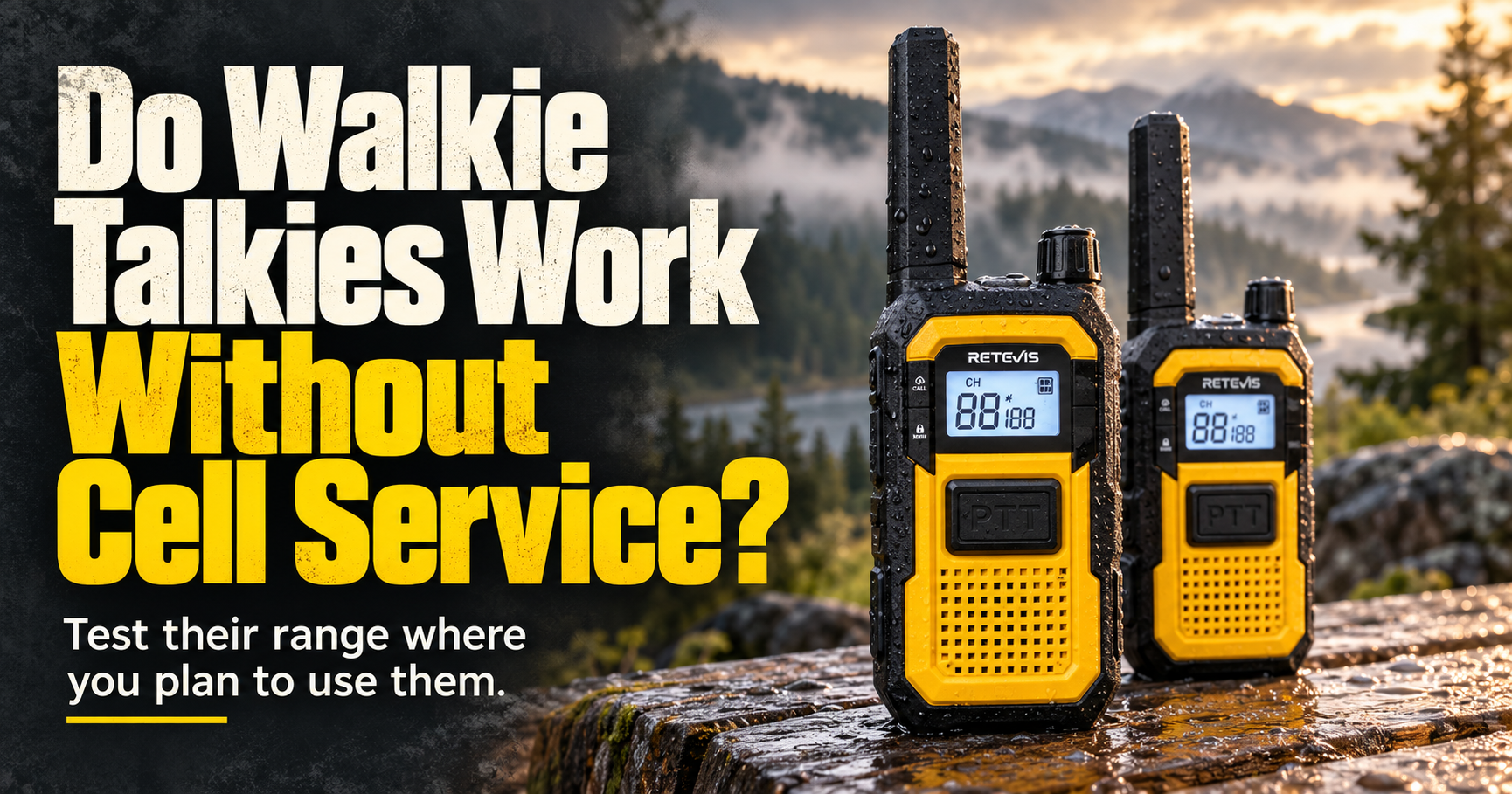
We’ve already covered why walkie talkies work even when cell service is down.
That’s where they fit in my family plan.
If we’re in separate vehicles.
On different parts of a property.
Camping.
Moving as a group.
Or dealing with a local cellular outage.
A radio can give us another way to stay connected.
But I Know Their Range Before I Need Them
I don’t assume a walkie talkie will reach everywhere.
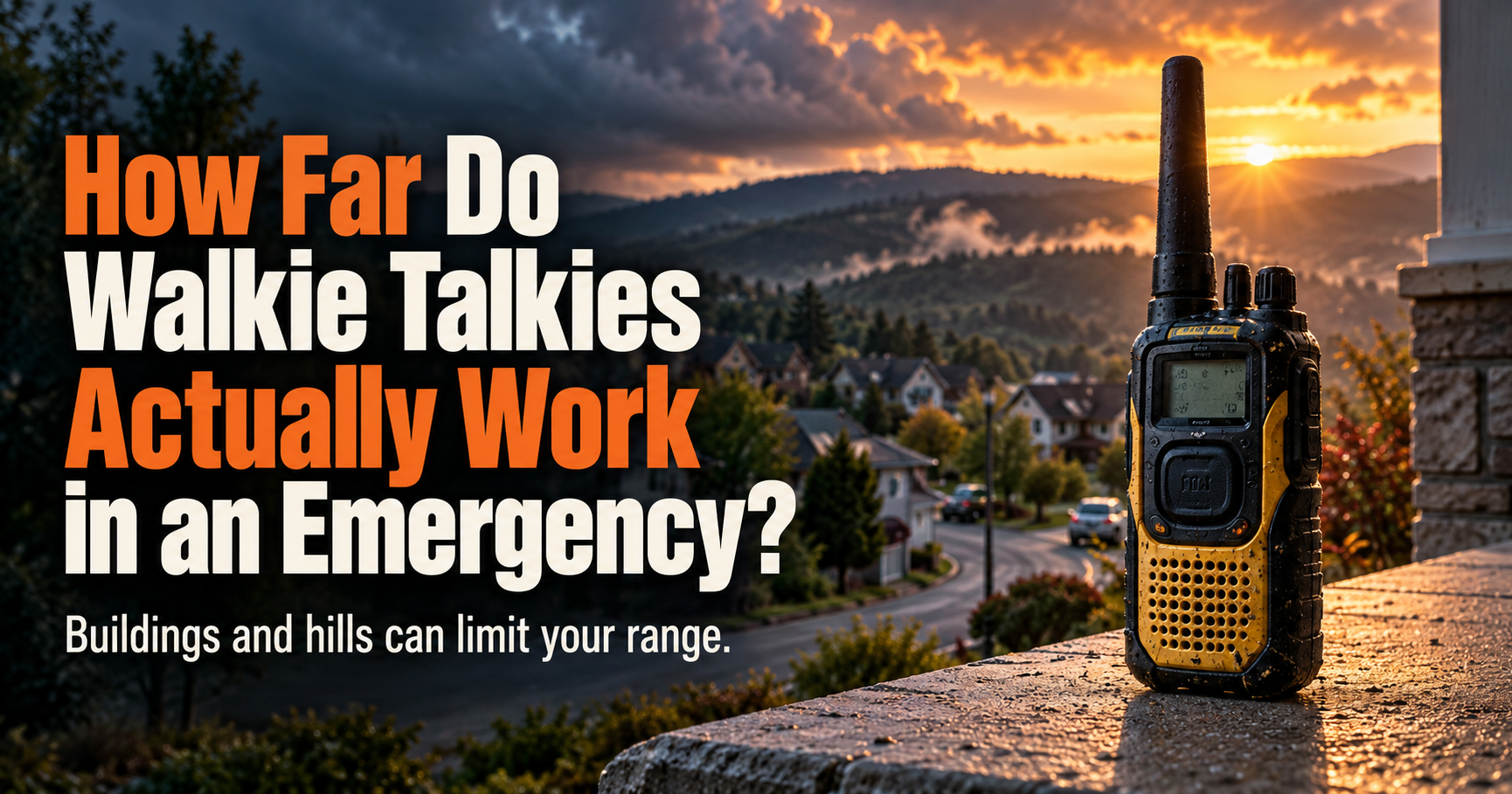
We’ve also tested the question of how far walkie talkies actually work in an emergency.
Hills.
Buildings.
Trees.
Concrete.
Distance.
All of those affect range.
That’s why the communication plan needs to reflect what the equipment can actually do.
The Radios We’re Using for Local Communication
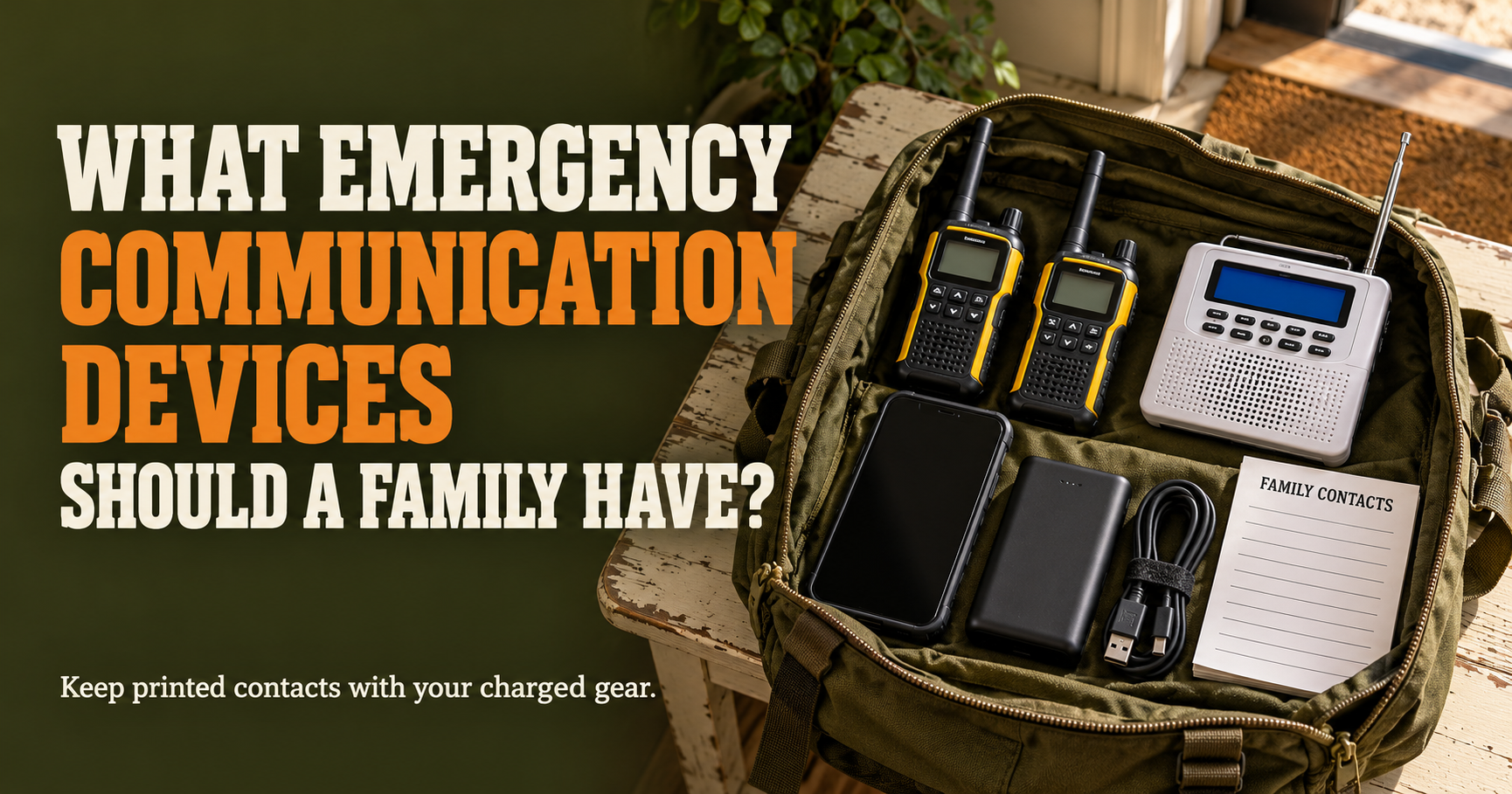
For simple family communication, the pair I like for this setup is the Retevis RB48 FRS Walkie Talkies. Those radios are one possible part of a larger set of family communication devices.
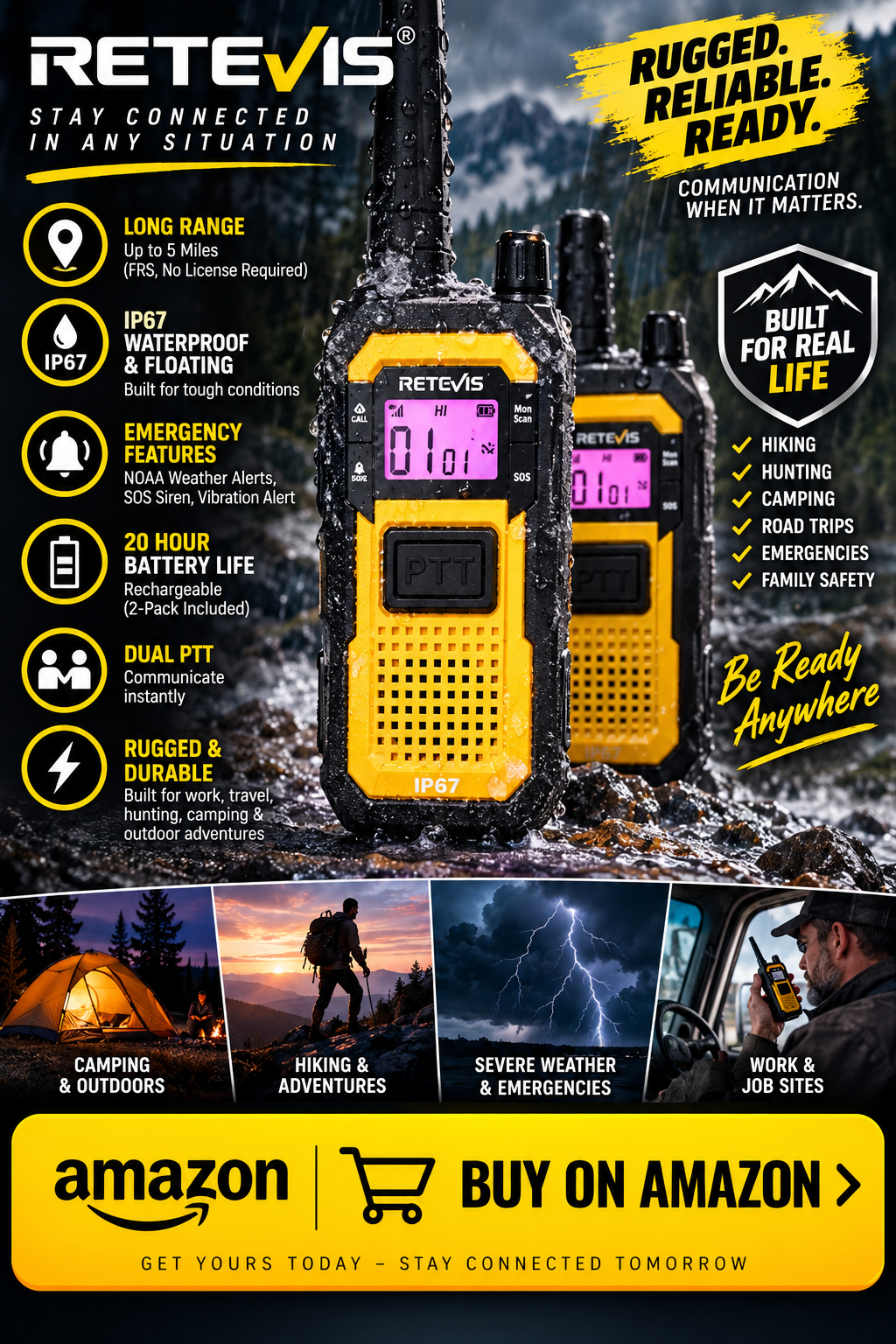
See the Retevis RB48 FRS Walkie Talkies on Amazon
They’re rugged, IP67 waterproof, rechargeable, have NOAA reception, and are straightforward FRS radios.
For my plan, I’d keep one radio with each group likely to become separated.
One in each vehicle during an evacuation.
One at home and one with someone working elsewhere on the property.
That makes much more sense than keeping both radios together in the same drawer.
Pick a Primary Radio Channel
If radios are part of the plan, I pick a channel ahead of time.
Then I pick a backup.
Something simple.
Primary: Channel 5
Backup: Channel 8
The specific channels matter less than everybody knowing what they are.
I don’t want anyone scrolling through settings trying to remember the plan during an emergency.
Ham Radio Adds Another Layer
For someone willing to learn more, amateur radio can provide communication options well beyond ordinary family walkie talkies.
We’ve already covered whether ham radio makes sense for emergency preparedness.
I wouldn’t expect everybody in my family to become licensed operators.
But having one trained person in the household could add another communication layer when normal systems fail.
A Weather Radio Is Still Essential to Me
Talking to family is only half the problem.
I also need information coming in.
Where is the storm?
Is there an evacuation order?
Is there a flash flood warning?
Are roads closed?
That’s why I also keep a dedicated emergency weather radio.
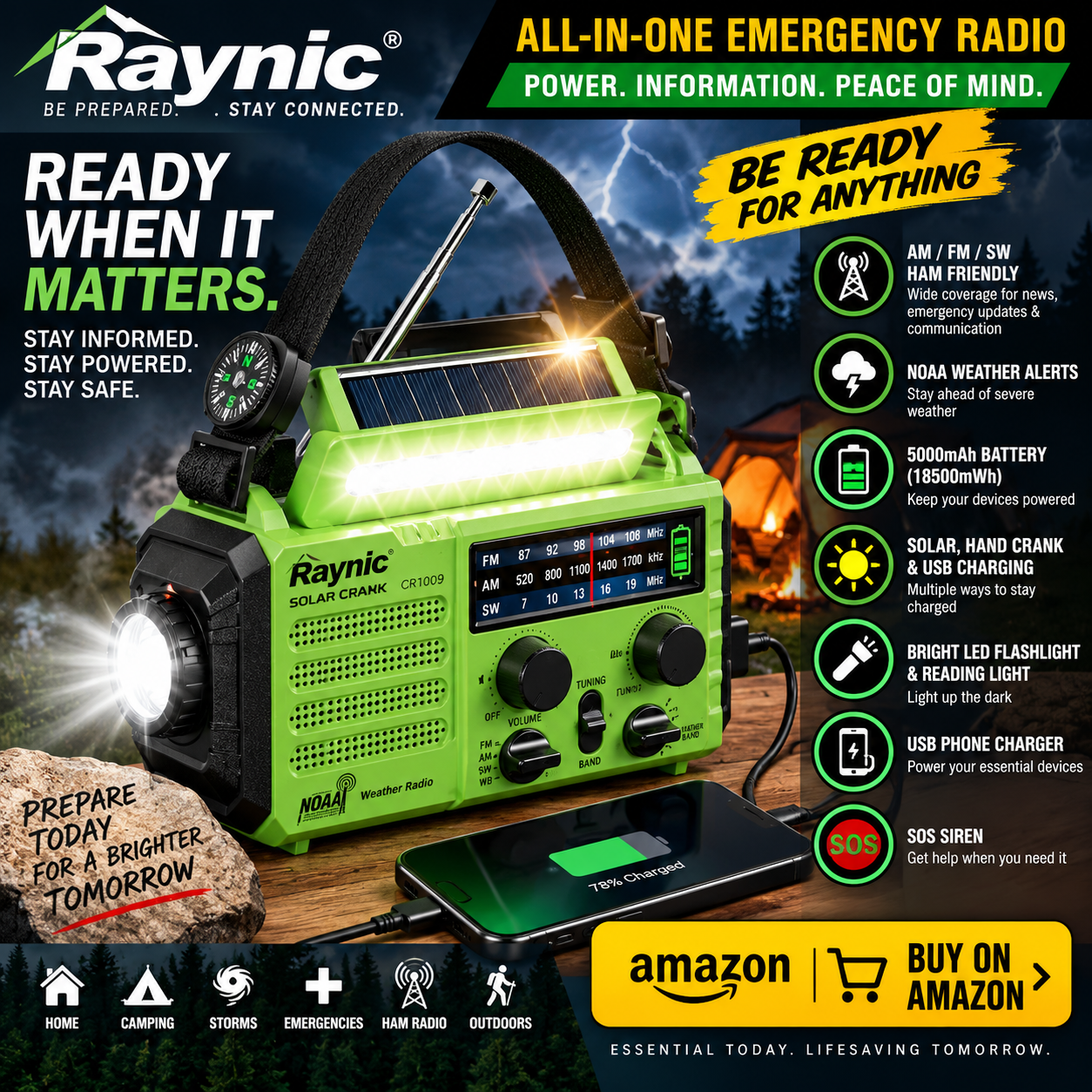
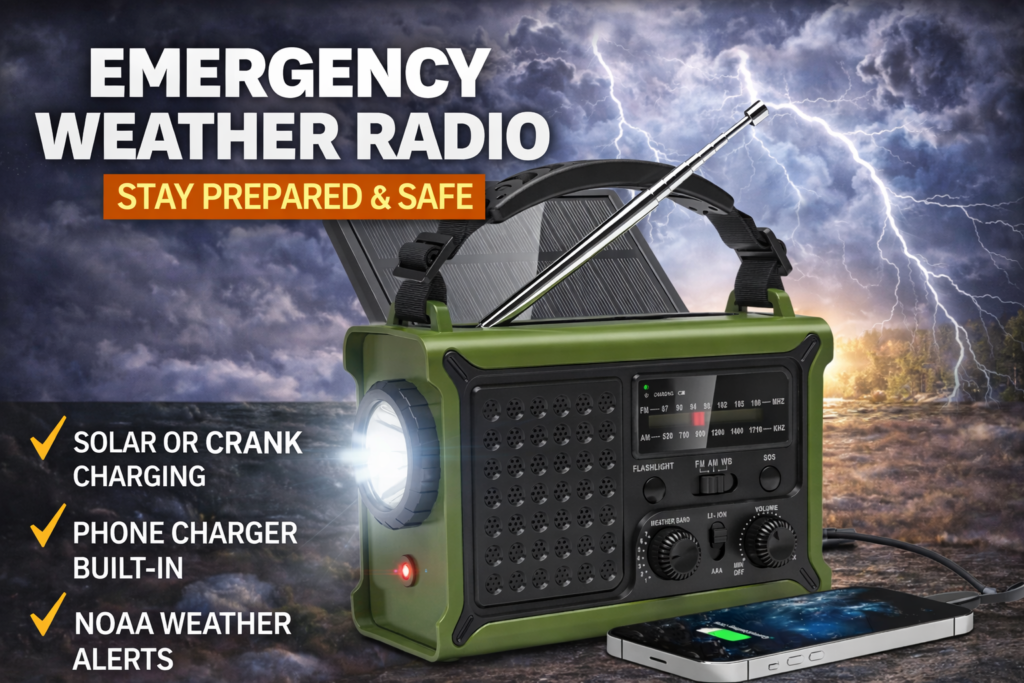
The one I’m using for this communication setup is the 5000mAh Solar Hand Crank Emergency Weather Radio.
It gives me NOAA weather reception, AM/FM/SW, a flashlight, SOS siren, emergency charging capability, and multiple charging options.
Walkie talkies help my family talk.
The weather radio helps us understand what’s happening around us.
Keep Important Numbers on Paper
Phones have made it easy to forget phone numbers.
That’s convenient until the phone doesn’t work.
I would keep a written list containing:
Out-of-area contact.
Parents.
Grandparents.
School.
Daycare.
Workplaces.
Doctors.
Veterinarian if needed.
Utilities.
Insurance contacts.
Emergency services where appropriate.
FEMA also recommends writing down numbers for emergency services, utilities, medical providers, veterinarians, insurance companies, and other important services.
I Would Keep Copies in More Than One Place
One copy in a kitchen drawer isn’t enough.
I’d keep one:
In the emergency kit.
In vehicles.
In backpacks.
In wallets or purses.
Possibly near the main family calendar.
If one location is inaccessible, the information isn’t gone.
Phones Should Have the Same Information
Paper is backup.
Phones are still convenient.
I would save the out-of-area contact in everyone’s phone.
FEMA also recommends identifying at least one emergency contact as an ICE, or In Case of Emergency, contact where appropriate.
I like having both digital and paper versions.
Kids Need a Simpler Version
I wouldn’t hand a young child a complicated emergency binder.
They need simple instructions.
If we’re separated:
Who do you call?
Where do you go?
Which trusted adult can pick you up?
What’s your home address?
What’s a parent’s phone number?
What’s the out-of-area contact?
The plan should match the child’s age.
Teach Kids Their Home Address
This sounds basic.
But if a child is old enough to remember it, knowing the home address can be extremely useful.
Same with at least one parent’s phone number.
Phones make it easy to never memorize anything.
Emergency preparedness is a good reason to memorize the basics.
Don’t Make the Plan Too Complicated
If the plan needs a 25-page binder to understand, nobody is going to remember it.
I want something closer to:
If we leave the house, meet here.
If the neighborhood is evacuated, meet here.
If we can’t contact each other, call this person.
If phones don’t work, try radios.
If we’re separated in vehicles, use this channel.
If none of that works, go to the agreed meeting location.
That’s a plan people can actually follow.
I Would Include Pets
If evacuation becomes necessary, pets create another responsibility.
Who gets them?
Where are carriers?
Where are leashes?
Where is food?
Where are vaccination records?
Which emergency location accepts animals?
Our communication plan should account for them instead of assuming somebody else will remember.
I Would Include Medical Needs
If someone in the household depends on:
Prescription medication.
Medical devices.
Mobility equipment.
Specialized food.
Oxygen.
Other critical supplies.
That changes the plan.
Maybe that person can’t simply walk several blocks to a meeting place.
Maybe backup power matters more.
Maybe transportation has to be planned differently.
The communication plan should fit the actual family.
Everybody Should Know Where Emergency Supplies Are
If I’m the only person who knows where everything is, that’s a bad system.
Family members should know where to find:
First aid.
Water.
Flashlights.
Radios.
Backup batteries.
Important documents.
Emergency food.
Basic tools.
That way the entire preparedness plan doesn’t depend on me being home.
The First Aid Kit Should Be Easy to Find
We’ve already spent a lot of time building out our first-aid preparedness.
During an emergency, I want everyone to know where the main kit is.
Not:
“Dad keeps it somewhere in the basement.”
One obvious location.
Easy access.
Everybody knows.
Vehicles Need Communication Information Too
If I’m away from home when something happens, the vehicle may become the temporary command center.
That’s another reason I like keeping:
Written contact list.
Radio.
Phone charger.
Water.
Basic first aid.
Map.
Other simple supplies in the vehicle.
I don’t need to turn every truck or car into a rolling bunker.
I just want enough to get home or reach our meeting place.
Maps Still Matter
Phones are excellent for navigation.
I use mine constantly.
But if cell service or data is unavailable, having an offline map or physical map can help.
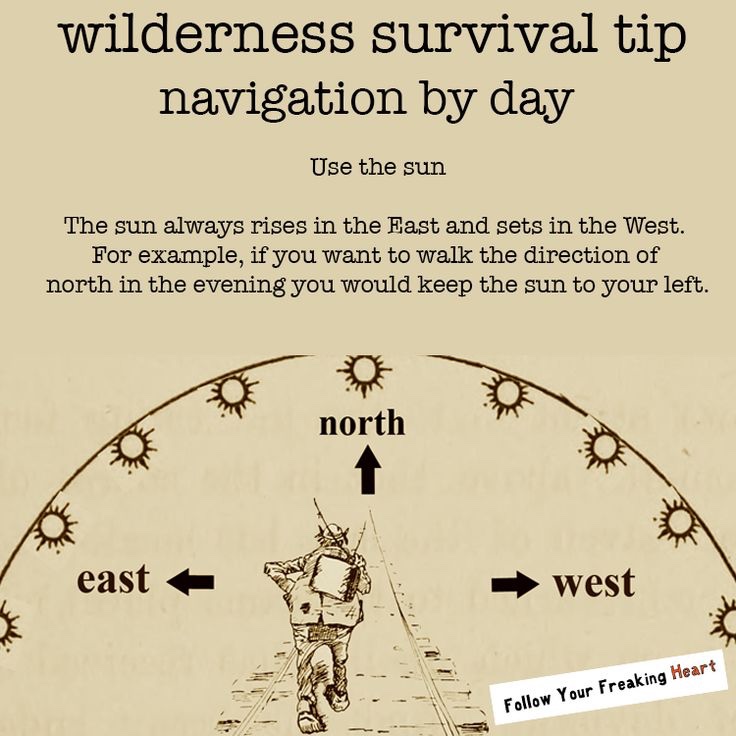
This connects directly with our broader survival navigation guide.
A meeting location isn’t much help if someone has no idea how to reach it without their normal map app.
The Plan Needs an Evacuation Version
If authorities tell us to evacuate, I don’t want everyone making separate decisions.
The plan should answer:
Who picks up whom?
Which vehicle do we take?
What’s our first route?
What’s our backup route?
Where do we meet if separated?
Where do we go outside the area?
How do we tell the out-of-area contact what happened?
Those decisions matter far more than owning another survival gadget.
It Also Needs a Shelter-in-Place Version
Not every emergency means leaving.
Sometimes staying home is safer.
If that’s the instruction, I want everyone to know:
Stay put.
Check in.
Use phones if available.
Use radios locally if needed.
Listen to emergency information.
Don’t drive around trying to find each other unless there’s a real reason.
Sometimes the safest communication plan is simply knowing that everyone should remain where they are.
I Would Practice the Plan
This is probably the part most families skip.
FEMA specifically recommends practicing the completed family communication plan.
I don’t need to stage a dramatic disaster drill every month.
I’d simply test pieces of it.
Send a text to the out-of-area contact.
Have the kids explain where the neighborhood meeting place is.
Test the walkie talkies.
Make sure everyone can find the emergency radio.
Check whether phone numbers are still correct.
That’s enough to expose problems.
I Would Review It at Least Once a Year
People move.
Phone numbers change.
Kids change schools.
Jobs change.
Relatives move.
Meeting locations stop making sense.
FEMA’s family communication plan specifically recommends reviewing and updating the information regularly.
Once a year is easy enough for me to remember.
I can also review it after any major family change.
I Would Update It After Moving
New house means:
New meeting place.
New evacuation routes.
New neighbors.
Possibly new schools.
New local hazards.
The old plan doesn’t automatically transfer.
I’d rebuild the important parts immediately.
The Best Plan Doesn’t Depend on One Person
This matters a lot to me.
I don’t want to be the only person who knows:
The contact numbers.
The radios.
The meeting place.
The school plan.
The supplies.
The evacuation route.
That’s not family preparedness.
That’s one prepared person surrounded by people who depend on them.
I want everybody involved at whatever level makes sense for their age.
My Family Emergency Communication Plan Is Pretty Simple
If I had to reduce it to the essentials, this is what I want:
- One out-of-area contact everyone knows
- One meeting place near home
- One meeting place outside the neighborhood
- One farther-away backup location
- School and daycare evacuation information
- Clear responsibility for picking up children
- Written important phone numbers
- Cell phones and text messaging as the first option
- Walkie talkies for nearby backup communication
- A primary and backup radio channel
- A weather radio for incoming emergency information
- Backup phone and radio power
- A plan for pets and medical needs
- Copies of the plan in several places
- Regular practice
That’s enough.
Communication Gear Is Only Half of Preparedness
I really like radios.
I like backup power.
I like having multiple ways to communicate.
But none of those things tell my family what to do.
That’s what the plan does.
The Retevis RB48 walkie talkies can keep nearby family members talking when cell service isn’t available.
The ham-radio option can provide more capability for someone willing to learn it.
The solar hand-crank weather radio can keep information coming in.
But if everyone is running in a different direction with no idea where to meet, the equipment hasn’t solved the biggest problem.
The Plan Matters Most When Nothing Works
That’s the standard I use.
Imagine the worst communication situation.
No phone call.
No text.
No internet.
Radio isn’t reaching.
Nobody can immediately get home.
Do my family members still know what to do?
If the answer is yes, then we actually have a communication plan.
Everyone knows the meeting places.
Everyone knows who the out-of-area contact is.
Everyone knows who’s responsible for the kids.
Everyone knows the next step.
That’s what I want.
Not a plan built around everything working perfectly.
A plan that still makes sense when it doesn’t.
About the Author
Caleb Mercer writes about emergency communications, power outages, backup power, and practical household preparedness for Survive Essentials. His work focuses on building communication systems families can actually use, creating practical backup plans before emergencies happen, and reducing dependence on any single device or service.