Most families assume they’ll have plenty of warning before a water emergency.
Unfortunately, that’s not always how it works.
Water main breaks happen without notice.
Storms damage infrastructure.
Power outages affect treatment facilities.
Winter weather freezes pipes.
Flooding contaminates water supplies.
When the tap suddenly stops working, it’s too late to start preparing.
That’s why every household should have a water emergency plan in place before disaster strikes.
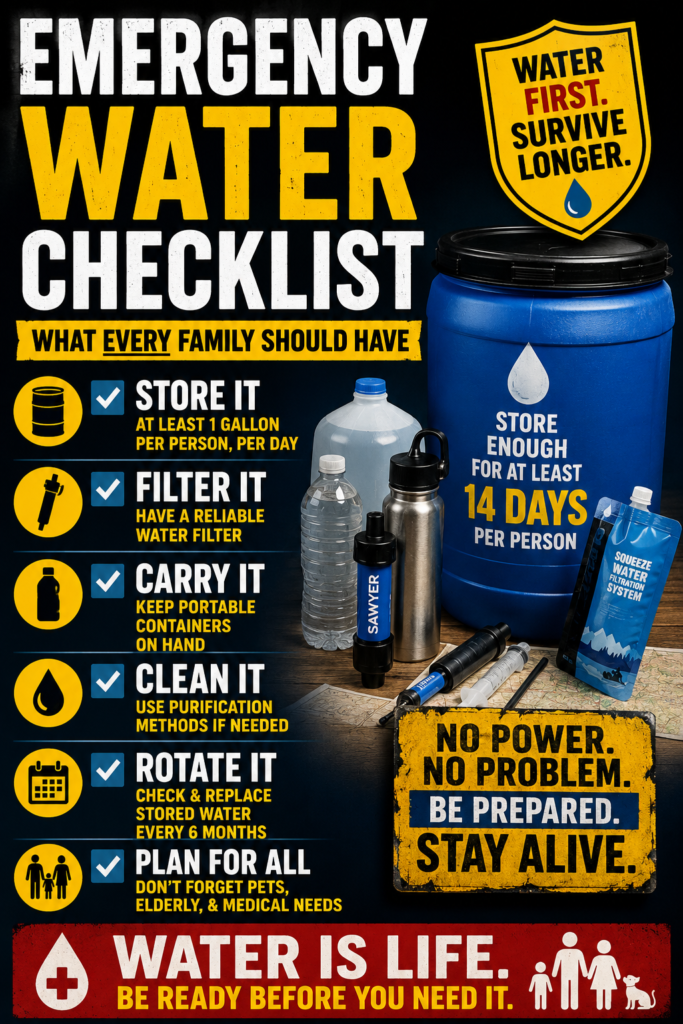
This checklist will help you identify gaps in your preparedness and build a water supply that can keep your family safe when normal water service becomes unavailable.
Start With Enough Drinking Water
Nothing matters more than having safe drinking water available immediately. Understanding How Long Can You Survive Without Water? The Truth Might Shock You reinforces why immediate access to safe drinking water belongs at the center of every household plan.
Many families only keep a few bottles of water in the house.
That may be enough for a day or two, but longer emergencies can quickly expose weaknesses in your plan.
A good starting point is understanding how much water your family actually needs.
If you haven’t already, read How Much Emergency Water Should a Family Store? and How to Build a 30-Day Emergency Water Supply for Your Family.
Those guides can help you create realistic storage goals based on your household size.
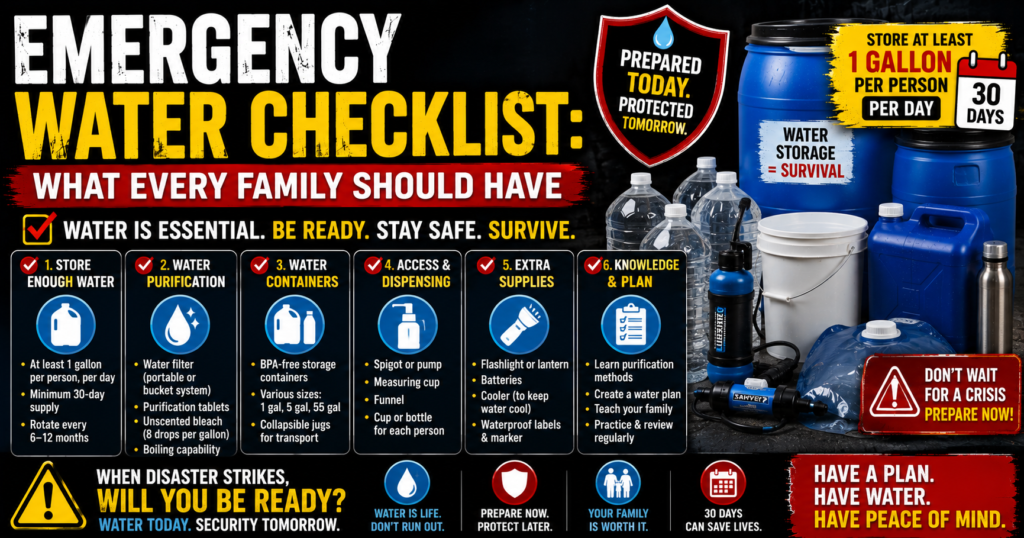
Water Checklist
✔ Bottled water stored
✔ Water for every family member
✔ Extra water for cooking
✔ Extra water for sanitation
✔ Extra water for medications
✔ Water for pets
Have a Plan if City Water Stops Working
Many people assume water service will always be available.
That assumption has proven wrong countless times.
Storms, equipment failures, frozen pipes, and infrastructure problems can interrupt service with little warning.
Understanding what happens during a disruption is an important part of preparedness.
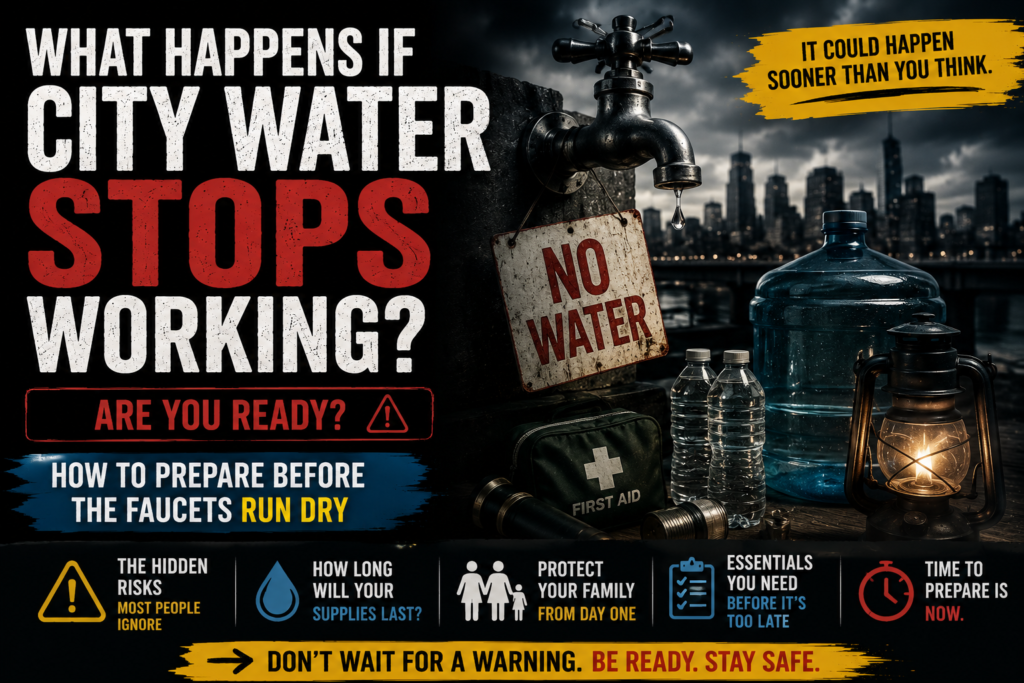
Our guide on What Happens If City Water Stops Working? explains what families can expect during an outage.
Water Outage Checklist
✔ Know where your water shutoff is located
✔ Have emergency water stored
✔ Have backup water sources identified
✔ Have a sanitation plan
✔ Understand local emergency procedures



Store Water in More Than One Location
One common mistake is keeping all water in a single location.
Spreading supplies throughout the home can reduce risk and make storage easier.
Possible storage locations include:
- Closets
- Under beds
- Utility rooms
- Basement shelving
- Spare bedrooms
- Behind furniture
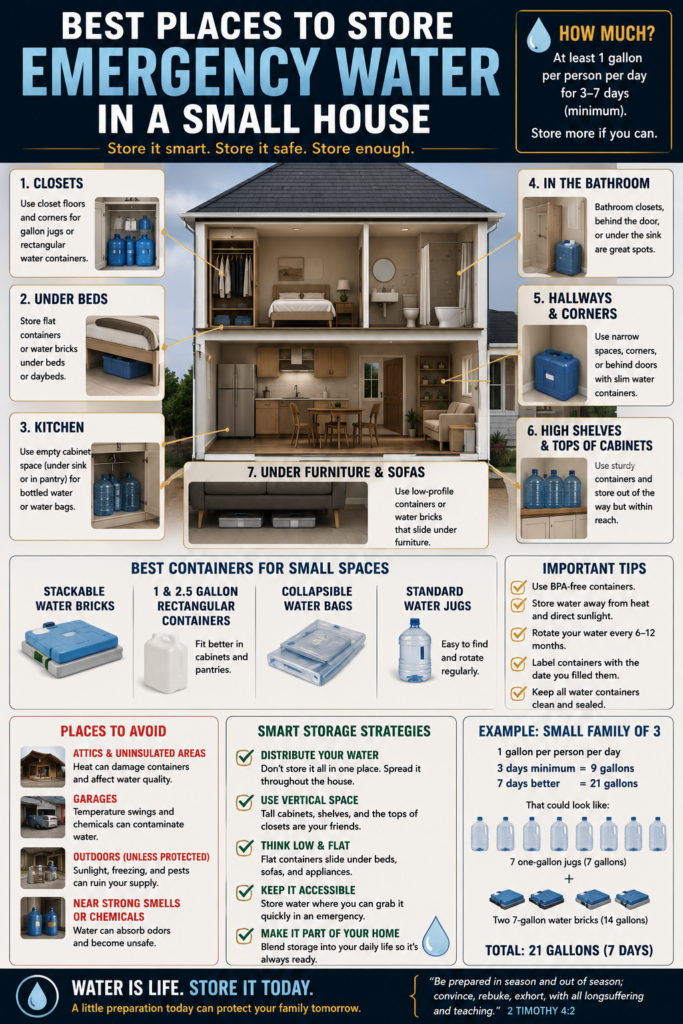
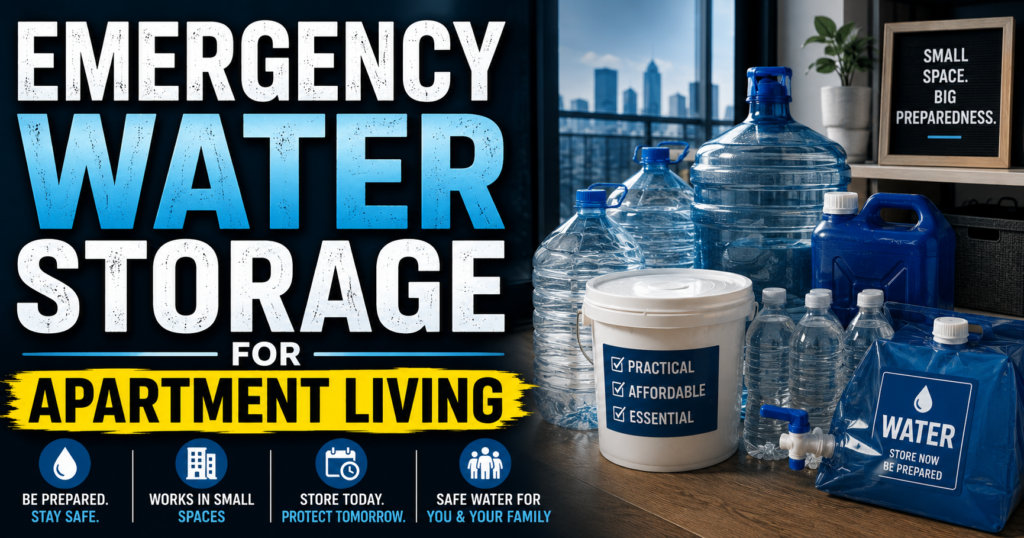
If storage space is limited, check out Best Places to Store Emergency Water in a Small House and Emergency Water Storage for Apartment Living.
Storage Checklist
✔ Multiple storage locations
✔ Cool storage conditions
✔ Water protected from sunlight
✔ Containers inspected regularly
✔ Storage locations easy to access
Keep Emergency Water Containers Ready
Water is only as useful as the container holding it.
Many families rely exclusively on bottled water.
That’s a great start, but additional storage options provide flexibility.
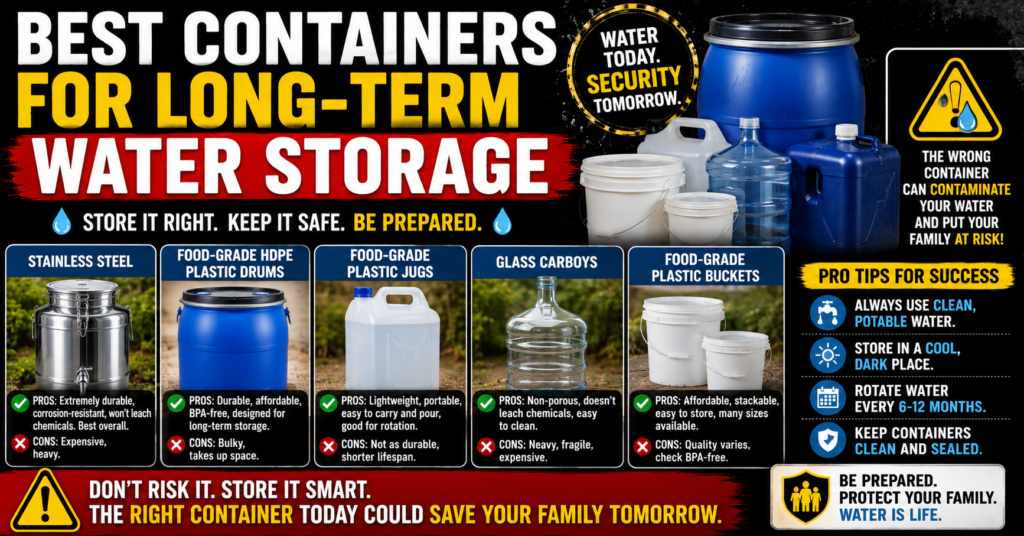
If you’re evaluating storage options, read Best Containers for Long-Term Water Storage.
Container Checklist
✔ Bottled water available
✔ Food-grade containers available
✔ Containers free from contamination
✔ Storage containers inspected periodically
✔ Backup storage options available
Prepare Before Severe Weather Arrives
One of the smartest preparedness strategies is increasing your water supply before a disaster arrives.
When severe weather is approaching, temporary storage can dramatically expand your reserves.
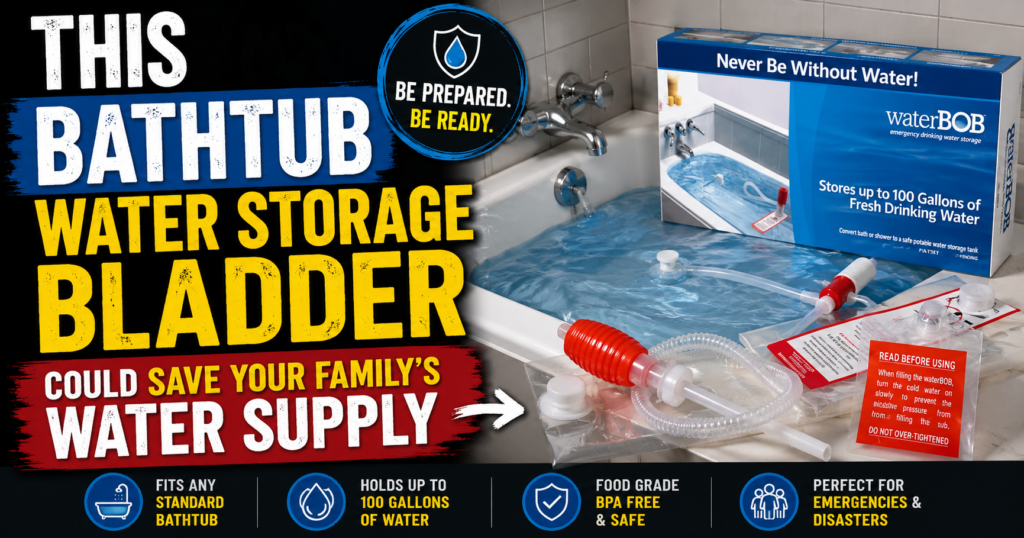
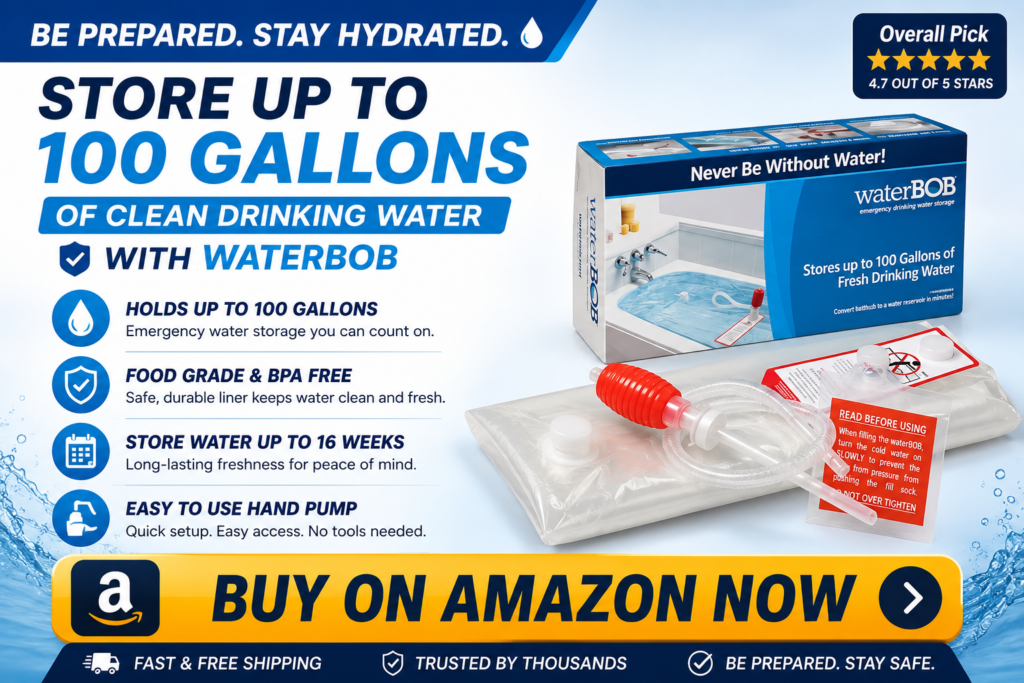
That’s why we recommend reading This Bathtub Water Storage Bladder Could Save Your Family’s Water Supply.
Being able to store up to 100 gallons of clean tap water before an outage begins can make a huge difference.
You can also see the bathtub storage system here:
Storm Preparation Checklist
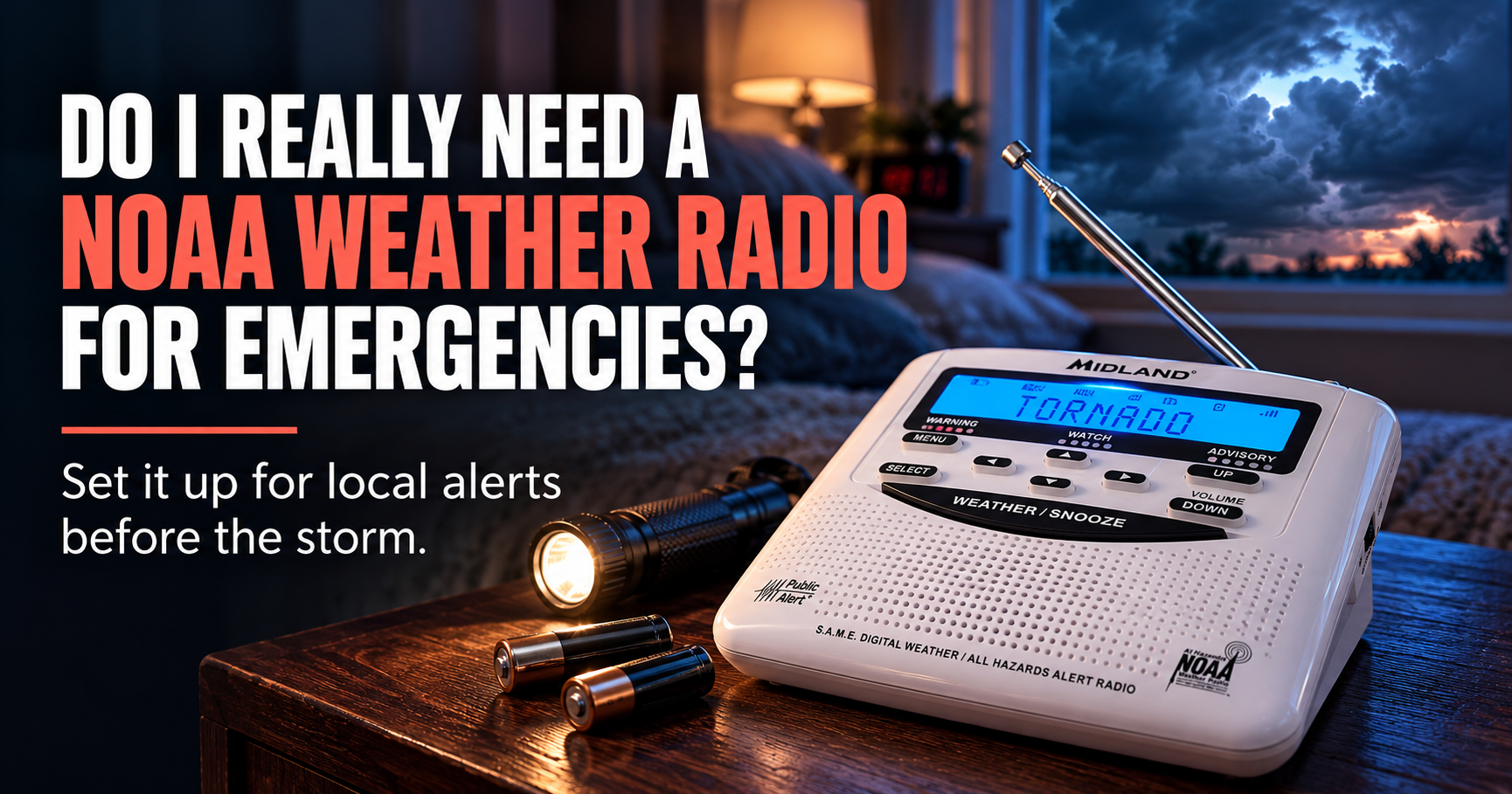
✔ Weather monitored regularly
✔ Temporary storage options available
✔ Bathtub storage plan ready
✔ Containers cleaned and ready
✔ Family knows emergency procedures
Have Backup Water Sources Identified
Even large water supplies eventually run low.
Prepared families understand where additional water could come from if necessary.
Potential sources include:
- Rainwater
- Water heaters
- Swimming pools
- Stored ice
- Community distribution sites
Learn more about these options in:
- Can You Drink Rainwater in an Emergency?
- Can You Use Pool Water in an Emergency?
- Can You Drink Water From a Hot Water Heater in an Emergency?
- Emergency Water Sources Most People Overlook
Backup Water Checklist
✔ Rainwater plan
✔ Water heater awareness
✔ Alternative water sources identified
✔ Family understands options
✔ Water collection supplies available

Every Family Needs Water Filtration
This is one of the most important items on the entire checklist.
No matter how much water you store, having a filtration method dramatically increases your flexibility during an emergency.
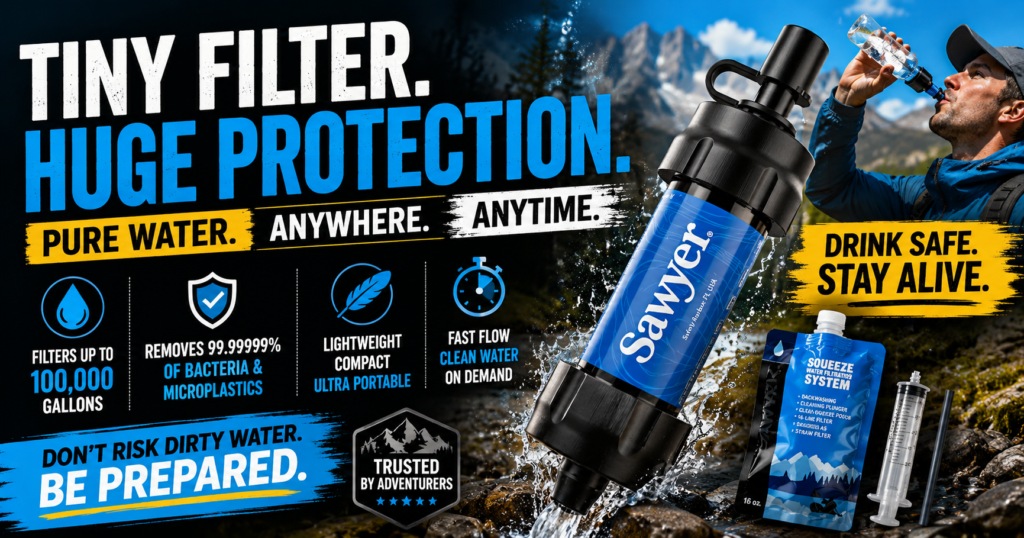
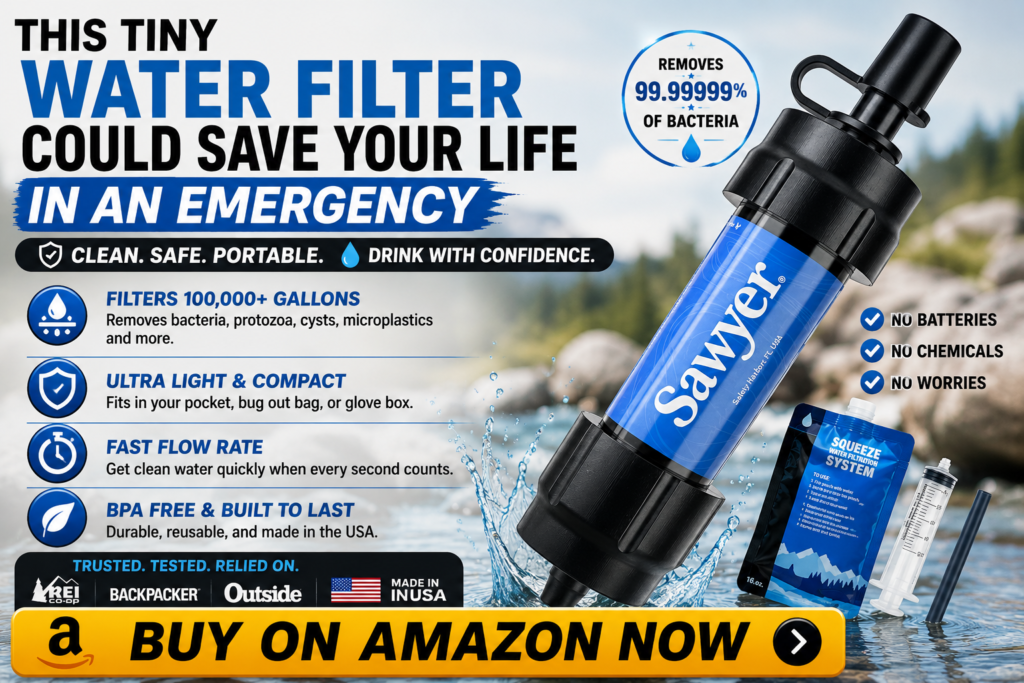
One of our favorite preparedness tools is This Tiny Water Filter Could Save Your Life in an Emergency.
The Sawyer Mini is compact, affordable, and capable of filtering an enormous amount of water.
Current pricing can be found here:
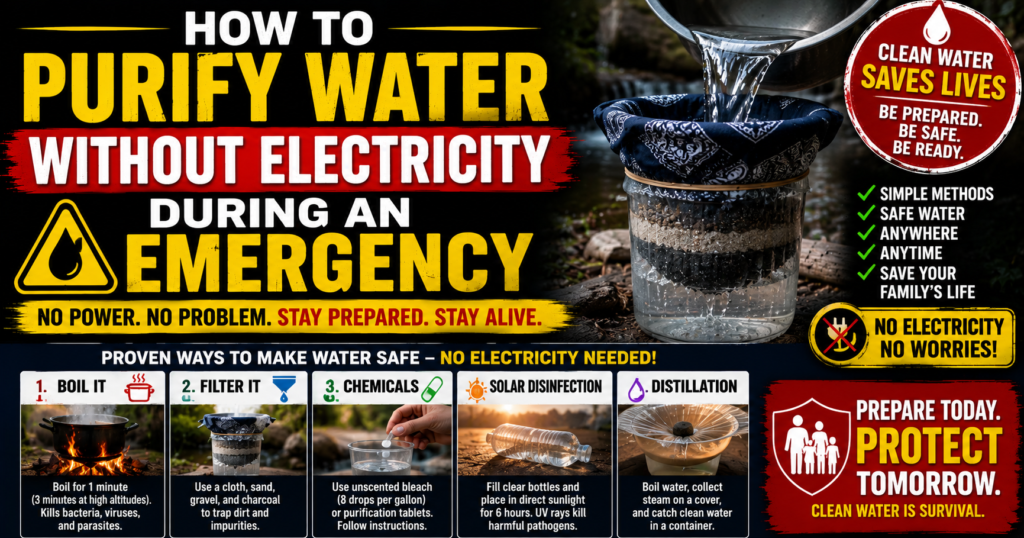
For a broader overview of treatment methods, read How to Purify Water Without Electricity During an Emergency.
Filtration Checklist
✔ Water filter available
✔ Filter tested before emergencies
✔ Backup purification methods available
✔ Family understands how to use equipment
✔ Replacement supplies available if needed
Avoid Common Water Storage Mistakes
Many preparedness plans fail because of simple mistakes.
Examples include:
- Not storing enough water
- Poor storage conditions
- No backup filtration
- Relying entirely on city water
- Ignoring maintenance
Before considering your plan complete, review Water Storage Mistakes That Could Leave Your Family Unprepared.
Mistake Prevention Checklist
✔ Storage inspected regularly
✔ Water rotated when necessary
✔ Multiple backup plans available
✔ Family knows emergency procedures
✔ Preparedness reviewed annually

Water Preparedness Is About Layers
The strongest emergency water plans don’t rely on one solution.
They combine multiple layers.
Stored water.
Backup storage.
Filtration.
Alternative water sources.
Emergency knowledge.
Each layer strengthens the others.
When families struggle during emergencies, it’s often because they depended on a single source.
The families who handle disruptions best usually have multiple options available long before the emergency begins.
A Quick Self-Assessment Before the Next Storm
Before closing this page, ask yourself a few simple questions.
Do you have enough water for your household?
Do you know where additional water could come from?
Do you have a filtration method?
Could your family handle a week without running water?
Could you handle a month?
If any of those questions made you uncomfortable, that’s actually good news.
You’ve identified an opportunity to improve your preparedness before the next emergency arrives.

Related Water Preparedness Articles
Building a reliable emergency water plan takes more than simply storing a few bottles of water. Explore these helpful guides to strengthen your family’s preparedness:
- Emergency Water Preparedness Guide: Everything You Should Know
- How to Build a 30-Day Emergency Water Supply for Your Family
- Emergency Water Checklist: What Every Family Should Have
- How to Purify Water Without Electricity During an Emergency
- What Is the Safest Water Source During an Emergency?