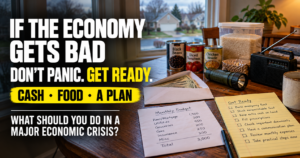
I love this country, and I hope America remains strong for my children and their children.
But loving America doesn’t mean assuming nothing bad can ever happen here.
Our country has been through depressions, recessions, bank failures, inflation, wars, shortages, civil unrest, natural disasters, and periods when ordinary families suddenly had to stretch every dollar much further than they expected.
I can’t control Washington.
I can’t control interest rates, the stock market, the banking system, inflation, international conflicts, or what happens to the economy next year.
What I can control is how dependent my family is on everything working perfectly.
That’s what economic-crisis preparedness means to me.
I’m not trying to predict the end of America.
I’m trying to make sure one lost job, temporary shortage, banking disruption, extended power outage, or period of high inflation doesn’t immediately turn into a household emergency.
And most of the preparation I’d make for a serious national economic crisis is useful even if that crisis never happens.
I Would Start With the Household, Not Politics
When people become worried about the direction of the country, it’s easy to spend hours watching news and arguing online.
That doesn’t put another meal in the pantry.
It doesn’t fill a water container.
It doesn’t reduce a credit-card balance.
It doesn’t refill a prescription.
It doesn’t give the family another way to communicate when cell service is down.
So my first question is practical:
What does my household absolutely depend on every week?
Food.
Water.
Income.
Housing.
Electricity.
Transportation.
Medication.
Communication.
Insurance.
Access to money.
Once I know those dependencies, I can start putting backups behind them.
I Would Build an Emergency Fund Before Buying Exotic Survival Gear
If I’m preparing specifically for an economic crisis, cash flow matters.
A job loss or sudden reduction in income is much more likely to hurt an ordinary family than some movie-style collapse.
FEMA’s financial-preparedness guidance recommends establishing emergency savings, even if someone can initially save only $5 or $10 a week. It also recommends creating a budget, reducing debt, reviewing insurance, protecting important records, and keeping some emergency cash accessible.
That isn’t flashy preparedness.
It’s good preparedness.
If I have $1,000 available for economic-crisis preparation but absolutely no emergency savings, I’m not spending all $1,000 on survival gadgets.
I’d rather have some financial breathing room.
I Would Know Exactly What It Costs to Keep My Household Running
This is something I’d want written down before income becomes uncertain.
What are the true necessities each month?
Mortgage or rent.
Electricity.
Water.
Insurance.
Food.
Fuel.
Medication.
Vehicle expenses.
Minimum debt payments.
Phone.
Other unavoidable bills.
Then I’d separate those from things we could temporarily reduce or eliminate.
That’s my emergency household budget.
If income suddenly drops 30%, I don’t want to begin figuring this out while panicking.
High-Interest Debt Makes a Bad Situation Harder
Debt is another vulnerability.
I’m not saying every family should somehow become completely debt-free before they’re allowed to prepare.
That’s unrealistic.
But expensive revolving debt reduces flexibility.
If every available dollar is already committed to payments, there’s less room to absorb a job loss, repair, medical bill, or spike in grocery prices.
So reducing expensive debt where practical is part of preparedness for me.
FEMA’s financial-emergency guidance similarly recommends making regular debt payments, paying bills on time, and contacting lenders about payment options when financial hardship occurs.

I Would Keep Some Cash at Home, but Not My Life Savings
Electronic payments are incredibly convenient.
They’re also dependent on systems.
Power.
Internet.
Payment networks.
ATMs.
Banks.
A temporary outage can make a perfectly healthy bank balance difficult to use at the grocery store for a while.
Ready.gov specifically recommends keeping emergency cash because ATMs and credit-card machines may not work during an extended power outage.
So yes, I’d keep a reasonable amount of cash securely at home.
Small bills are particularly useful.
But I wouldn’t respond to economic fear by withdrawing my entire life savings and hiding it in the house.
That creates different risks.
I Would Understand How My Bank Deposits Are Protected
Fear about banks can spread quickly during financial uncertainty.
I’d rather understand the system before rumors start flying.
The FDIC’s standard deposit-insurance amount is currently $250,000 per depositor, per insured bank, for each account ownership category. Coverage applies automatically to eligible deposits at FDIC-insured institutions.
That doesn’t mean every financial product is FDIC insured.
Stocks, bonds, mutual funds, crypto assets, life-insurance policies, annuities, and safe-deposit-box contents aren’t FDIC-insured deposits.
I’d know what I actually own instead of assuming every dollar connected to a financial company receives the same protection.
I Would Have More Than One Way to Pay
This is different from panicking about banks.
It’s basic redundancy.
If one credit card is compromised, I want another option.
If an ATM network isn’t working, cash helps.
If my primary bank temporarily has a technical problem, I don’t want every household payment method tied to one card sitting in my wallet.
Preparedness is often simply removing single points of failure.
I Would Build a Real Food Reserve
If grocery prices climb rapidly or household income drops, food storage becomes financial preparedness.
I’m not talking about filling a bunker with 25 years of freeze-dried meals.
I’d start with food we already eat.
Rice.
Pasta.
Oats.
Canned meat.
Canned vegetables.
Beans.
Peanut butter.
Shelf-stable milk where appropriate.
Cooking basics.
Comfort foods.
Whatever actually fits the household.
The goal is being able to look at the pantry during a difficult month and realize we don’t need a $300 emergency grocery run.
I Would Buy Ahead, Not Panic Buy
There’s a big difference.
Buying two extra cans of something we regularly eat while it’s on sale is preparation.
Buying 40 packages of toilet paper because social media says civilization is ending is panic.
I want the pantry growing gradually.
That lets me watch sales, rotate food normally, and avoid spending a huge amount of money at once.
Our upcoming emergency-food-storage cluster will go much deeper into this because food is one of the largest remaining preparedness gaps on Survive Essentials.
Water Still Comes Before a Lot of Fancy Supplies
An economic crisis doesn’t automatically shut off the water.
But a larger national disruption can overlap with storms, utility problems, infrastructure failures, or local emergencies.
Water is too important for me to leave completely to chance.
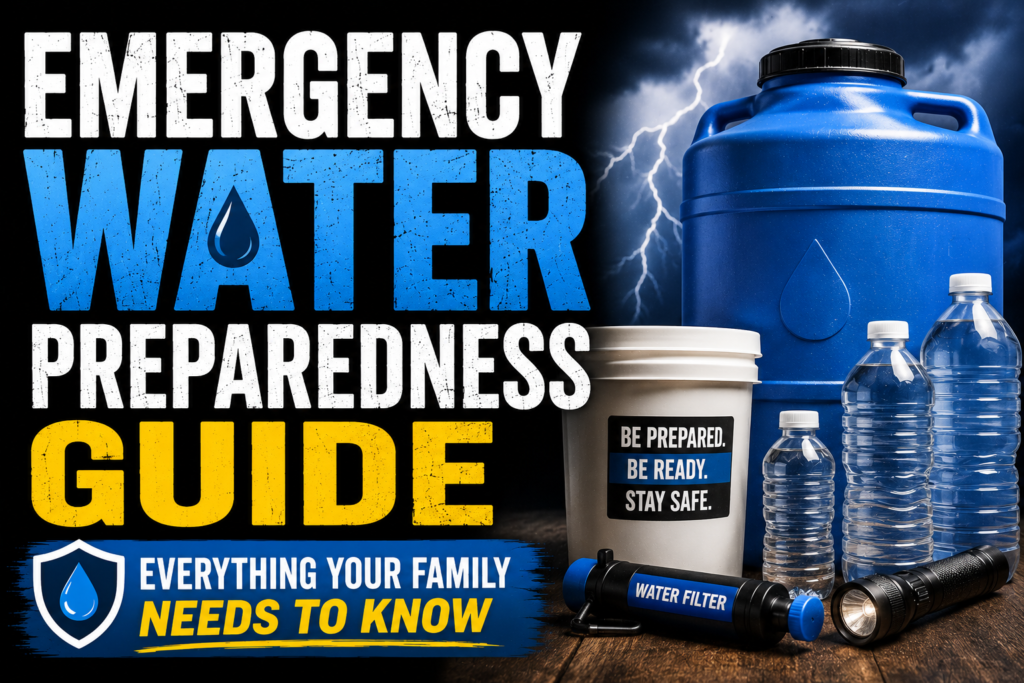
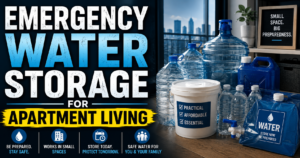
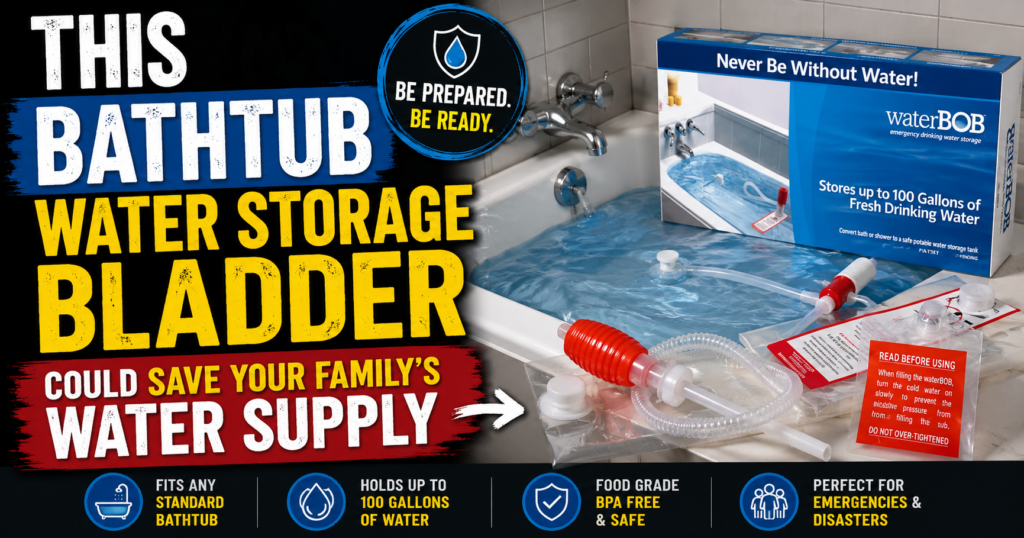
We’ve already built a complete emergency water preparedness guide covering how much water to store, containers, purification, backup sources, and longer disruptions.
That’s one area I would have squared away before spending money on specialized crisis gear.


I Would Keep Everyday Necessities Ahead of Shortages
When people hear “shortage,” they immediately think about food.
There are other things I’d hate to suddenly run out of.
Toilet paper.
Soap.
Laundry detergent.
Trash bags.
Diapers when applicable.
Pet food.
Feminine hygiene products.
Batteries.
Basic medications.
Cleaning supplies.
First-aid supplies.
I don’t need five years of them.
A little extra inventory gives me time.
If something temporarily disappears from shelves or doubles in price, I don’t immediately have a problem.
Prescription Medication Deserves Its Own Plan
For anyone dependent on medication, this can be much more important than another bucket of rice.
I’d know:
What medications are essential?
How many days are normally available?
When can prescriptions be refilled?
What happens if a pharmacy closes temporarily?
Does anything require refrigeration?
What information would another pharmacy or healthcare provider need?
I would work with the prescribing healthcare professional and pharmacist rather than rationing, stockpiling, or changing medication on my own.
I Would Keep the First Aid Supplies Stocked
A strained healthcare system or transportation disruption can make minor injuries much more inconvenient.
That’s one reason we’ve been building the First Aid cluster.
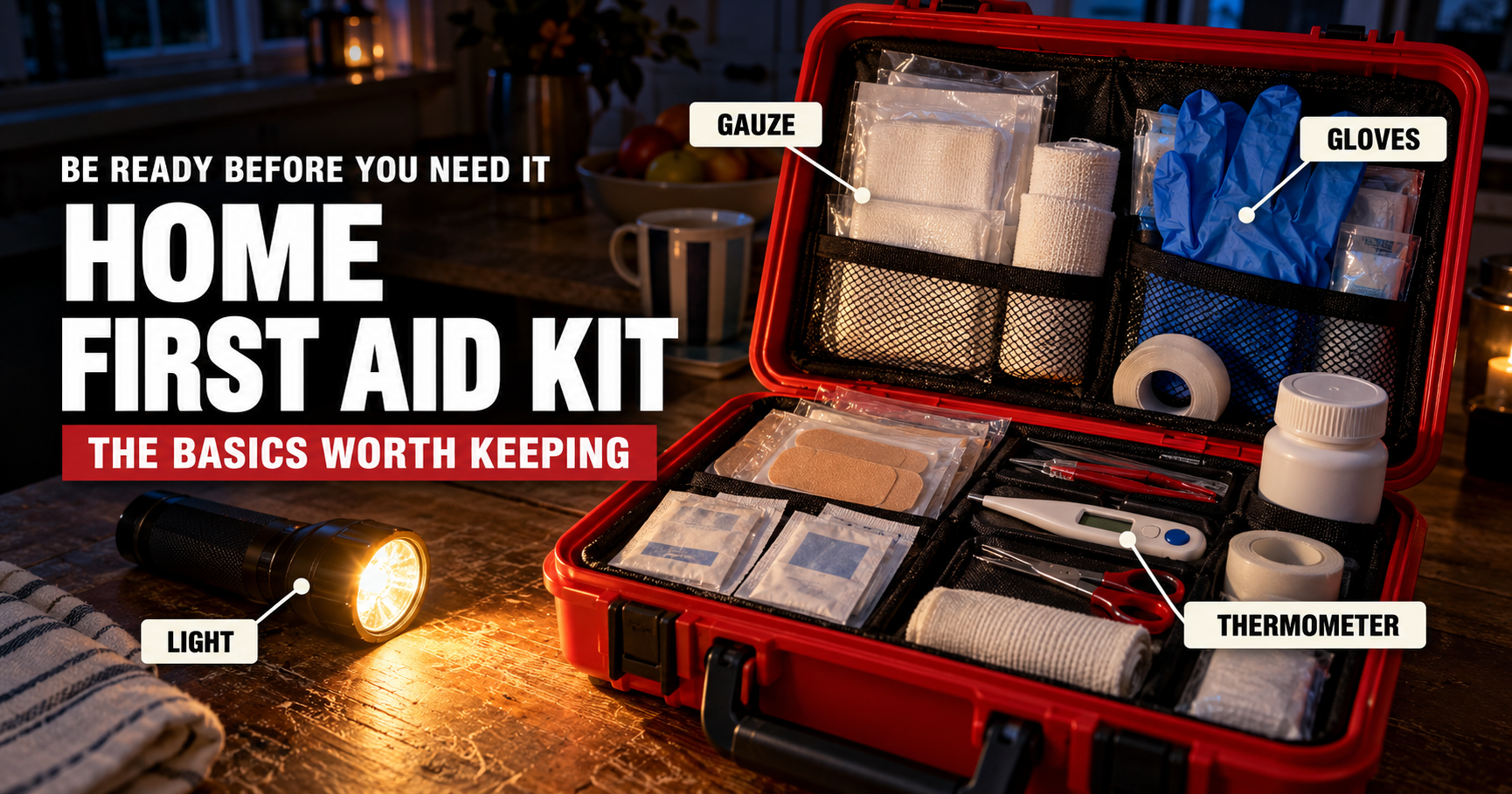
Our home emergency first aid kit is designed around useful supplies rather than a giant piece count.
It doesn’t replace medical care.
It makes the household more capable while that care is being reached.
I Would Protect Important Documents
This is boring until the day I need them.
Identification.
Insurance policies.
Property records.
Financial information.
Tax records.
Medical information.
Important account information.
Legal documents.
FEMA and the Consumer Financial Protection Bureau recommend protecting important financial and personal records, keeping copies, and storing them securely. Paper originals can be kept in appropriate fire- and water-resistant storage, while secure digital copies provide another layer.
I don’t want one fire, flood, evacuation, or computer failure to erase every important household record.
I Would Inventory What We Own
Photos and video of the house and major belongings can be extremely useful after a disaster.
FEMA recommends documenting property and keeping important records because they can help with insurance and recovery.
This takes an afternoon.
Walk through the house with a phone.
Open closets.
Photograph valuable equipment.
Record serial numbers where useful.
Then store the information somewhere secure.
That’s preparedness with an excellent return on the time invested.
I Would Make the House More Capable During an Outage
Economic problems and electrical outages aren’t automatically connected.
But household resilience overlaps.
If the power disappears tonight, can we handle it?
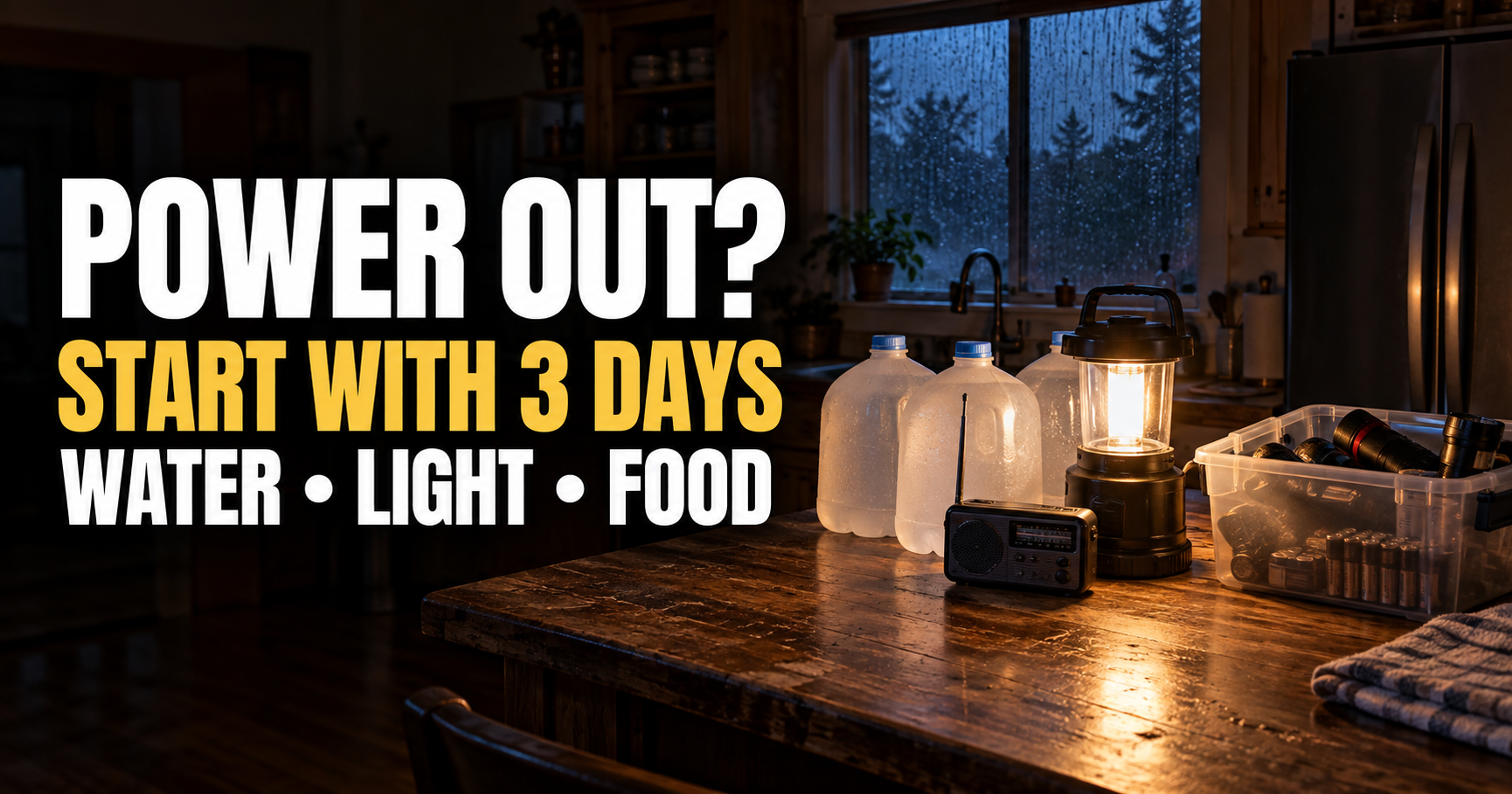
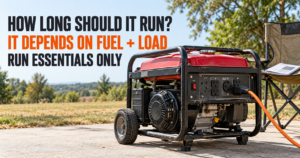
We’ve already built our long power-outage preparedness plan around refrigeration, charging, generators, heating, cooling, cooking, wells, toilets, sump pumps, and extended outages.
That’s exactly the kind of capability I want.
Not because I expect the national grid to collapse.
Because power outages already happen.
I Would Keep the Vehicles From Living on Empty
I don’t need every vehicle topped off every night.
I also don’t like constantly driving around with the fuel light on.
If something happens locally and we need to leave, waiting in a gas line isn’t my preferred first step.
Fuel also matters if income suddenly drops.
Having transportation gives a family options.
Work.
Medical care.
Relatives.
Evacuation.
Supplies.
I protect that mobility.
I Would Have a Plan for Losing My Income
This may be the most realistic economic-crisis scenario of all.
What if my income stops next Friday?
Not America’s economy.
Mine.
Which bills get paid first?
Which subscriptions disappear immediately?
How long can the pantry carry us?
How much emergency savings exists?
What expenses can be postponed?
What can I sell?
What other work can I do?
Who needs to be contacted before a payment is missed?
FEMA recommends contacting lenders and credit-card companies to discuss payment options during financial hardship rather than simply ignoring bills.
I want that plan before pride and panic start making decisions for me.
Multiple Useful Skills Are Another Form of Savings
Money isn’t the only reserve a family can build.
Skills matter.
Can I repair things?
Grow food?
Cook inexpensive meals from basic ingredients?
Perform basic first aid?
Fix a fence?
Maintain equipment?
Preserve food?
Handle basic home maintenance?
Earn money in more than one way?
A capable household can solve problems that another household has to pay someone else to solve.
That’s valuable during good times.
It’s even more valuable when money gets tight.
I Would Strengthen Local Relationships
This is one area preparedness culture sometimes gets completely backward.
I don’t want to be the lone family hiding behind the curtains while everybody else is treated as a threat.
Good neighbors are an asset.
So are family members, friends, churches, volunteer groups, local businesses, farmers, tradespeople, and community organizations.
During real disasters, people often survive and recover by helping one another.
A neighbor with a chainsaw may be more useful than another $200 survival gadget.
And someday I may be the neighbor with the thing somebody else needs.
I Would Know Where Local Food Comes From
A resilient food plan isn’t only a closet full of cans.
I’d like to know:
Who grows food nearby?
Where are the farmers markets?
Are there local meat processors?
Local produce stands?
Farmers selling directly?
Local bakeries?
Feed stores?
Independent grocery stores?
Those relationships and options can matter if national distribution gets disrupted or prices change sharply.
I Would Learn to Grow Something
I’m not pretending a backyard garden instantly makes a family food independent.
It doesn’t.
But growing some food teaches useful skills.
Soil.
Timing.
Weather.
Pests.
Preservation.
Seed saving where appropriate.
What actually grows where I live.
Those lessons are much easier to learn when grocery stores are full than when someone suddenly decides they need a survival garden.
I Wouldn’t Bet the Family’s Future on One “Crisis Investment”
Every major economic fear seems to produce someone selling the one asset that supposedly saves everybody.
Gold.
Silver.
Crypto.
Land.
Cash.
Stocks.
Foreign currency.
Some of those may have legitimate roles in someone’s financial plan.
None of them is something I’d blindly bet the family’s future on because a scary video said the dollar will be worthless next Tuesday.
Diversification and understanding what I own make more sense to me than fear-driven financial decisions.
For personal investment decisions, I’d consider qualified financial guidance rather than treating preparedness content as individualized investment advice.
I Would Be Extremely Suspicious of Crisis Scams
Fear makes people easier to rush.
Scammers know it.
A message says the bank is failing.
Click now.
Move your money.
Buy this asset immediately.
Pay this emergency fee.
Give us the verification code.
FEMA specifically warns people to be cautious of scams after disasters and not to give out personal identification numbers.
My rule during a crisis is simple:
Urgency is a reason to verify, not a reason to stop thinking.
I Would Keep My Information Backed Up
If my phone breaks during an evacuation, I don’t want every contact, document, photo, and account record disappearing with it.
The federal disaster checklist recommends keeping secure backups of important computer files and storing copies of critical records separately.
I like redundancy here too.
Secure digital backup.
Appropriate physical copies.
Important information available when normal technology isn’t cooperating.
I Would Have a Family Communication Plan
Economic trouble can overlap with demonstrations, outages, severe weather, transportation problems, or other local disruptions.
If everyone is separated when something happens, we need a plan.
Who calls whom?
Where do we meet?
Who picks up the kids?
What if calls won’t go through?
Who is our out-of-area contact?
Ready.gov recommends making and practicing a family communication plan and provides planning resources for exactly this reason.
We’ll eventually build this into the dedicated Emergency Communications cluster.
I Wouldn’t Go Looking for Civil Unrest
If a protest, riot, or violent disturbance is happening somewhere else in town, I’m not driving toward it to see what’s happening.
My job is keeping the family away from unnecessary danger.
I want alternate routes home.
I want reliable information.
I want enough supplies that I don’t have to make a grocery run through an unstable area.
And if authorities issue legitimate emergency instructions for my area, I pay attention.
Preparedness should reduce exposure to chaos, not turn chaos into entertainment.
I Would Know When Staying Home Stops Being the Smart Choice
Most of the time, home is where my supplies are.
That makes sheltering at home attractive.
But circumstances can change.
Fire.
Flooding.
Violence immediately nearby.
Loss of safe drinking water.
Extreme temperatures.
Medical needs.
Structural damage.
Some situations make leaving safer.
We’ve already worked through that decision in when I leave home during a long power outage.
I don’t stay just because leaving feels like admitting the plan failed.
Leaving can be part of the plan.
I Would Keep the Bug-Out Bags Practical
If we need to leave quickly, I don’t want to pack the entire house.
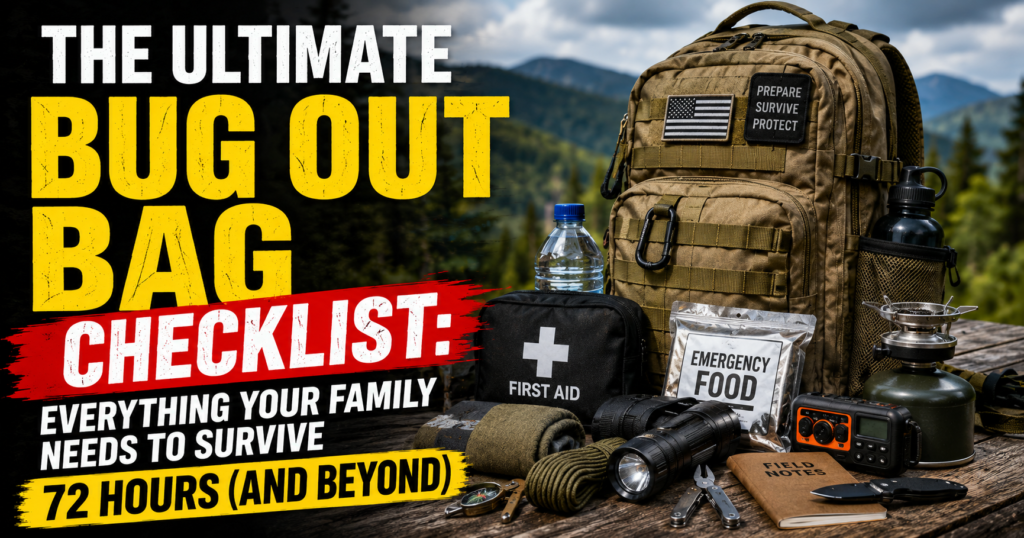
That’s why we’ve already built a 72-hour family bug-out bag checklist.
Identification.
Water.
Food.
Medication.
Basic first aid.
Clothing.
Communication.
Lighting.
Necessary personal items.
The bag is there to make leaving easier.
It isn’t supposed to contain everything needed to rebuild civilization.
I Would Pay Attention to Reliable Information
Rumors explode during uncertainty.
One screenshot becomes “breaking news.”
An old video gets reposted as if it happened this morning.
Someone invents a quote and attaches a famous person’s name to it.
That matters because bad information causes bad decisions.
I want multiple credible sources before making a major move with money, supplies, travel, or family safety.
Being skeptical doesn’t mean distrusting everything.
It means verifying important claims before acting on them.
I Wouldn’t Let Politics Consume the Preparedness Plan
I care deeply about America.
I value freedom, self-reliance, the ability to work, raise a family, own property, worship or not worship according to conscience, speak freely, participate in civic life, and build something for the next generation.
But my emergency pantry doesn’t need a party affiliation.
Neither does my water storage.
My generator doesn’t care who won an election.
First aid works the same way regardless of who’s in Congress.
That’s why I want Survive Essentials focused on the part ordinary Americans can actually use:
How do I make my family harder to knock down?
I Would Keep Participating in Civic Life
Preparing for a serious economic crisis doesn’t mean withdrawing from the country or assuming everything is doomed.
I would do the opposite.
I’d keep paying attention to what’s happening locally, statewide, and nationally. I’d vote. I’d stay informed about decisions affecting my community. I’d know who my local officials are and how to contact them. I’d pay attention to school boards, county government, emergency management, utilities, taxes, and the policies that directly affect my family.
America’s system gives ordinary citizens lawful ways to participate, including voting, petitioning government, speaking publicly, assembling, contacting representatives, and participating in local government.
Those rights aren’t something I’d take for granted simply because the economy became difficult.
Preparedness and civic participation can exist together.
I Would Be Careful About Viral Political Claims
This is especially important during a crisis.
Fear makes misinformation spread incredibly fast.
A dramatic quote appears on Facebook.
Someone says banks are closing tomorrow.
Another post claims grocery stores won’t receive another shipment.
A screenshot says the government is about to announce something enormous.
Within hours, thousands of people may be sharing it.
Before I change my family’s plans because of something online, I want to know where it actually came from.
Is there an original speech?
An official announcement?
A government document?
A named source?
Multiple credible news organizations independently reporting it?
Or is everyone simply sharing the same screenshot?
That doesn’t mean governments, companies, or news organizations are always correct. It means I want enough information to make my own judgment instead of letting a viral post make it for me.
The Khrushchev Quote Is Actually a Good Example
The post that got me thinking about this subject attributed a frightening prediction about America to Soviet leader Nikita Khrushchev.
The supposed quote says Americans would be fed “small doses of socialism” until they eventually discovered they had communism.
There’s a problem.
Researchers have been unable to verify that Khrushchev actually said those words. The widely circulated attribution to a September 29, 1959 United Nations speech doesn’t match the historical record.
Khrushchev certainly wasn’t shy about criticizing capitalism or promoting communism. He made plenty of genuine statements Americans found threatening during the Cold War.
But that doesn’t make every quote attributed to him authentic.
I think that’s an important preparedness lesson in itself.
Something doesn’t become true because it confirms what I’m already worried about.
I Can Care Deeply About America Without Believing Everything I Read
Those two things aren’t in conflict.
I can value individual liberty.
I can value private property.
I can value religious freedom.
I can value free expression.
I can value the right to participate in government.
I can want my children to inherit a prosperous and free country.
And I can still fact-check a political claim before repeating it.
In fact, I think that’s the more responsible approach.
A population that’s easy to panic, divide, or deceive isn’t particularly resilient.
I Would Prepare for Economic Problems Without Pretending I Can Predict Them
Nobody knows exactly what the next major American economic crisis will look like.
It could involve recession.
High unemployment.
Persistent inflation.
Banking problems.
Housing problems.
Supply disruptions.
Energy problems.
A major natural disaster.
Geopolitical events.
Or some combination nobody predicted particularly well beforehand.
That’s why I don’t build my preparedness around one political prediction.
I build around consequences.
If groceries become expensive, stored food helps.
If electricity becomes unreliable, backup power helps.
If clean water becomes temporarily unavailable, stored water helps.
If income disappears, emergency savings and lower monthly obligations help.
If electronic payments temporarily fail, alternative payment options and some emergency cash can help.
If communication networks become overloaded, a family communication plan helps.
If emergency services are delayed, first-aid knowledge helps.
Those preparations remain useful even if my prediction about why the crisis happens turns out to be completely wrong.
I Would Keep Some Emergency Cash
I wouldn’t pull every dollar out of the banking system and hide it under the mattress.
That’s creating a different kind of risk.
But I do think keeping a reasonable amount of physical cash available can make sense.
A power outage or communications failure can temporarily prevent card terminals and ATMs from working even when the financial system itself is perfectly healthy.
I’d favor smaller bills that are actually useful for buying necessities.
How much depends on the household.
The point isn’t preparing for money to become worthless.
It’s preparing for the possibility that the normal way I access money temporarily doesn’t work.
I Wouldn’t Keep All My Financial Eggs in One Basket
Financial resilience matters too.
I want access to money if one card gets compromised, one payment network has trouble, or one financial institution temporarily has a problem.
I also want to understand how my accounts are protected.
For eligible deposits at FDIC-insured banks, federal deposit insurance generally covers at least $250,000 per depositor, per insured bank, for each ownership category.
That doesn’t eliminate every financial risk.
It does mean I wouldn’t respond to every frightening banking rumor by immediately withdrawing everything.
Understanding how the system actually works helps me make calmer decisions.
Debt Would Matter a Lot to Me Before a Crisis
One of the best emergency supplies may be a smaller monthly payment.
Every household is different, and getting out of debt isn’t something that happens overnight.
But if I can reduce high-interest debt, avoid unnecessary new obligations, and create more room in the monthly budget, I’ve made the household harder to financially break.
A family needing $4,000 every month just to keep all the payments current has less flexibility than the same family needing $2,500.
That’s preparedness even though it doesn’t come in a tactical-looking backpack.
I Would Build an Emergency Fund Gradually
I don’t need $20,000 sitting in savings before I can call myself prepared.
I’d start where I am.
A few hundred dollars can solve problems that zero dollars can’t.
Then I’d work toward covering increasingly larger unexpected expenses and eventually some period of essential household costs.
The Consumer Financial Protection Bureau recommends establishing an emergency savings fund because even a small amount can provide financial security when unexpected expenses occur.
That emergency might be a national recession.
It might also be a transmission going out next Tuesday.
Either way, the money is useful.
I Would Store Food We Actually Eat
A serious economic downturn doesn’t automatically mean grocery stores become empty.
But food prices can rise and household income can fall at the same time.
Having extra shelf-stable food gives me options.
I don’t need a basement filled with 30 years of freeze-dried meals.
I’d start with foods my family already eats and rotate them.
Rice.
Pasta.
Canned vegetables.
Canned meat.
Beans.
Peanut butter.
Oats.
Shelf-stable staples.
Then I’d gradually build toward a deeper reserve.
We’re going to build an entire emergency-food-storage cluster on Survive Essentials because this deserves much more detail than one section here.
Water Comes Before Almost Everything Else
Economic crisis or not, I don’t want my household completely dependent on one water source functioning perfectly.
We’ve already built a complete emergency water preparedness guide.
That’s one of the strongest forms of preparedness I can recommend.
Water doesn’t care which political party is in office.
If the municipal system fails, a well pump loses electricity, or contamination affects normal service, stored clean water becomes valuable immediately.
I Would Keep Basic Household Supplies Ahead
I’m not talking about panic-buying 200 rolls of toilet paper.
I’m talking about not waiting until we’re completely out of something important before replacing it.
Soap.
Toilet paper.
Toothpaste.
Batteries.
Cleaning supplies.
Pet food.
Diapers if needed.
Basic medications and first-aid supplies.
Items the household genuinely consumes.
Keeping reasonable extras turns a short disruption into an inconvenience instead of an emergency.
Prescription Medication Deserves Special Planning
For anyone dependent on prescription medication, this can be much more important than canned food or survival gadgets.
I would talk with the prescribing clinician, pharmacist, and insurer about what emergency refill options are legally and medically appropriate.
I wouldn’t ration medication or change dosing on my own just because I’m worried about a future shortage.
But I would understand the refill process before there’s a problem.
First Aid Becomes More Valuable When Systems Are Stressed
This is exactly why we’ve been building our first-aid cluster.
If hospitals and EMS are dealing with unusually high demand, knowing how to handle the first few minutes of an injury becomes even more valuable.
We’ve already covered what I keep in a home emergency first aid kit, along with bleeding, wounds, burns, fractures, tourniquets, and shock.
The goal isn’t replacing doctors.
It’s being less helpless while professional care is on the way.
I Would Have More Than One Way to Communicate
Cell phones are incredible.
They’re also one system.
During widespread emergencies, networks can become overloaded or unavailable.
I’d keep phones charged, have backup battery power, know important numbers without depending entirely on one device, and establish a family plan for what happens if we can’t immediately reach one another.
This is another unfinished cluster we’ll be expanding on Survive Essentials.
Everyone in My Family Would Know the Plan
Preparedness shouldn’t live entirely inside one person’s head.
If I’m away from home when something happens, my family still needs to know what to do.
Where do we meet?
Who do we call?
Where are the emergency supplies?
Where is the first aid kit?
Where is stored water?
What if the kids are at school?
What if cellular service isn’t working?
What circumstances would make us leave home?
A ten-minute family conversation can be more valuable than another $100 piece of survival gear.
I Would Know My Neighbors
This may be one of the most underrated forms of preparedness.
A good neighbor might have the chainsaw I don’t own.
I might have the generator they need.
Someone down the road may be a nurse.
Another person may know how to repair equipment.
Someone may have a tractor.
Another family may need help.
Communities have survived hard times long before modern emergency-management systems existed.
Self-reliance doesn’t have to mean isolation.
Sometimes being resilient means having people around you who look out for one another.
I Would Learn Useful Skills
Skills can’t be sold out at the store.
Basic first aid.
Cooking from basic ingredients.
Water treatment.
Home repairs.
Gardening.
Food preservation.
Using a generator safely.
Basic financial management.
Navigation.
Knowing how to shut off utilities.
Those skills remain valuable whether the economy is booming or struggling.
That’s one reason I think preparedness is worth doing even if the crisis I’m worried about never happens.
I Would Keep Important Documents Organized
A financial or social disruption isn’t when I want to start searching through 14 drawers for important paperwork.
Identification.
Insurance information.
Property records.
Medical information.
Financial account information.
Emergency contacts.
Copies of important documents where appropriate.
I want those organized and protected.
I also want secure backups of important digital information.
I Would Keep the Vehicles From Living on Empty
I don’t need every vehicle topped off every evening.
But I don’t like letting the fuel gauge live on empty either.
If something happens and I suddenly need to travel, evacuate, pick up family, or reach another town, fuel gives me options.
During a widespread disruption, gas stations may have electricity problems, supply problems, or long lines.
Keeping a reasonable amount of fuel in the vehicle is simple preparedness.
I Would Know When Staying Home Stops Making Sense
Most emergencies don’t require evacuation.
Home is where my supplies are.
It’s familiar.
It’s shelter.
But I don’t stay simply because leaving feels like admitting defeat.
We’ve already covered when I would leave home during a long power outage.
The same thinking applies more broadly.
If there’s violence nearby, fire, flooding, loss of safe water, dangerous temperatures, a medical emergency, or another immediate threat that makes the house unsafe, leaving may become the better option.
Preparedness gives me choices.
I Wouldn’t Go Looking for Trouble
If demonstrations, riots, or civil unrest are happening somewhere else in town, I’m not driving over there to see what’s happening.
I’m not interested in getting caught between opposing groups, police activity, blocked roads, fires, or frightened crowds.
My priority is getting my family home and staying away from unnecessary danger.
That’s not cowardice.
That’s risk management.
I Wouldn’t Let Fear Make Every Decision
This might be the hardest part.
Economic crises can produce enormous uncertainty.
People worry about jobs.
Savings.
Food prices.
Retirement.
Housing.
Crime.
Politics.
Their children.
Fear can be useful when it makes me prepare.
It’s much less useful when it makes me impulsive.
I don’t want fear convincing me to drain retirement accounts, buy things I don’t understand, empty grocery shelves, believe every rumor, or make major financial decisions overnight.
Preparedness should make me calmer.
Not more panicked.
I Want My Family Less Dependent on Perfect Conditions
That’s really the entire strategy.
I don’t know whether America’s next serious crisis will be economic, political, natural, technological, or something nobody currently expects.
I don’t know who will be in power when it happens.
And I don’t need to know.
I can still make my household harder to knock down.
Stored water.
Extra food.
Emergency savings.
Lower unnecessary debt.
Backup power.
First-aid skills.
Useful tools.
Communication plans.
Reliable transportation.
Important documents.
Good neighbors.
Practical skills.
Those things give my family breathing room.
Being Pro-American and Being Prepared Fit Together for Me
I don’t prepare because I want America to fail.
I prepare because I want my family, my community, and my country to remain strong when something goes wrong.
I value the freedom to build a life, raise a family, own property, work, worship, speak, vote, start a business, help my neighbors, and make decisions for my own household within the law.
Those freedoms also come with responsibility.
I don’t expect somebody else to solve every problem for me.
If I can store water, I store water.
If I can learn first aid, I learn it.
If I can put some money aside, I work toward it.
If I can keep food on the shelf, I do.
If I can help a neighbor during a hard week, I help.
That’s the kind of preparedness I believe in.
Not panic.
Not rumors.
Not waiting helplessly for someone else to rescue us.
Just ordinary Americans becoming a little harder to knock down when times get difficult.
About the Author
Mason Reed writes about household resilience, economic preparedness, self-reliance, emergency planning, and practical ways American families can become less vulnerable to disruptions outside their control. His work for Survive Essentialsfocuses on calm, realistic preparedness built around useful skills, strong households, reliable supplies, and communities capable of helping one another when normal systems are under strain.